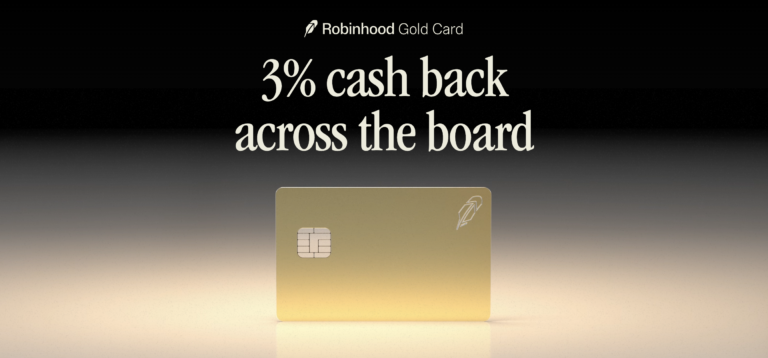
Quick answer: The Robinhood Gold Card is worth it if you already use Robinhood, spend at least $1,667/year on the card, and don’t mind redeeming rewards into a Robinhood brokerage account — the flat 3% cash back beats nearly every no-annual-fee competitor. It’s a weaker fit if you only want statement-credit rewards or don’t want a Robinhood account.

Get a FREE stock worth up to $200 the moment you fund a new account with just $10, plus up to $15,000 more per year in free stock when you refer friends. U.S. residents only.
- U.S. stocks, ETFs, options, and cryptos, all commission-free
- Excellent for beginners and advanced investors
- Cash management account and credit card
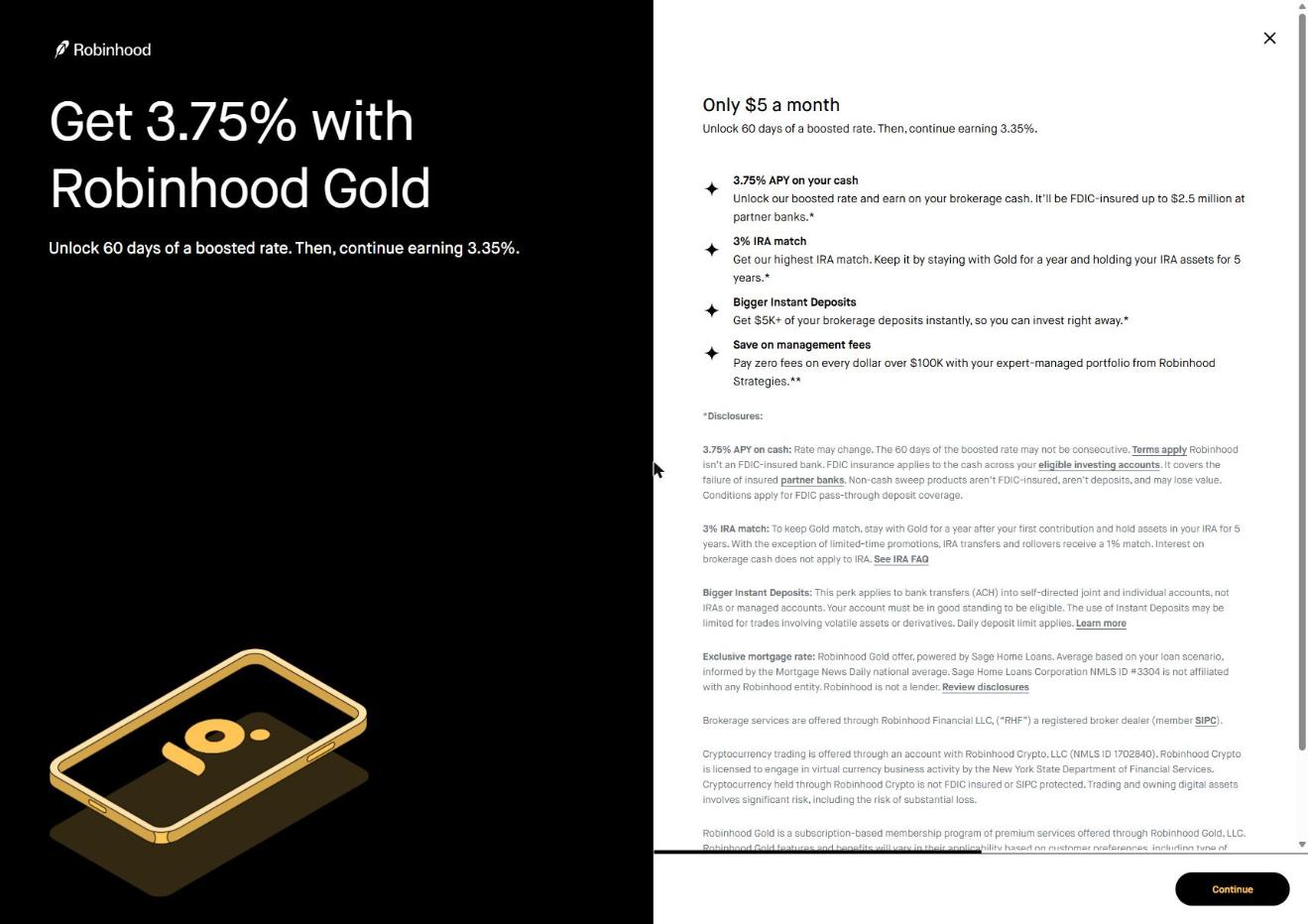
- Upgrade to Gold for better rates on cash, margin, and a 3% IRA contribution match
- SIPC protected up to $500,000, plus FDIC coverage on uninvested cash
- Connect your favorite AI agent directly to your account and let it research, monitor, and trade for you with a dedicated funded account and a one-tap kill switch you control
- Predictive Markets: Trade real-time "Yes/No" event contracts on sports, politics, weather, and finance. Put your read on the world to work, with instant settlement when the outcome hits
Note: this guide covers the Robinhood Gold Card — the credit card. If you’re weighing whether the Robinhood Gold membership itself (the $5/month subscription with cash APY, margin, and IRA match) is worth it on its own, see our dedicated Is Robinhood Gold Worth It? review.
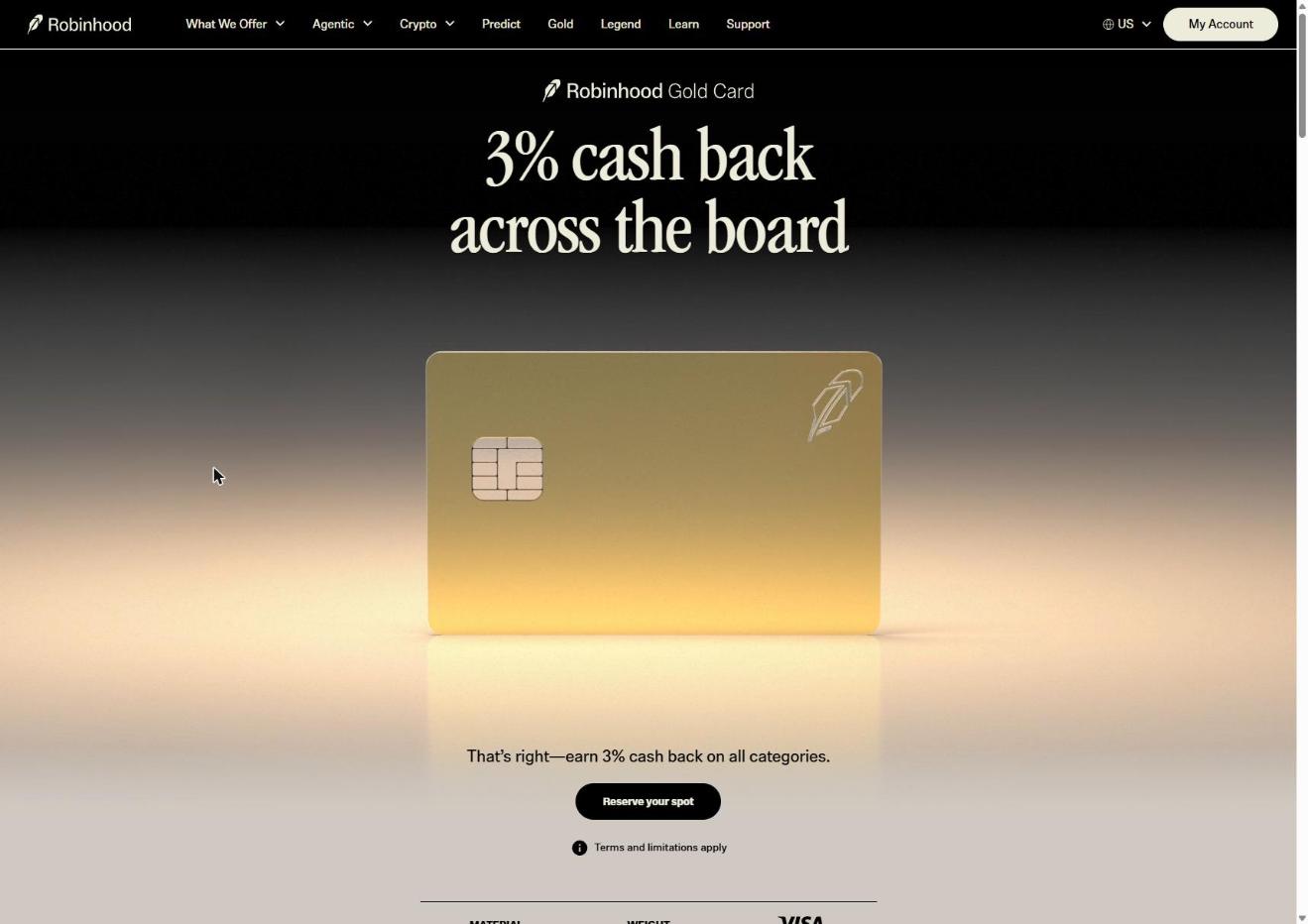
The Robinhood Gold Card is one of the most talked-about credit cards to hit the market in years — and for good reason. It’s a metal card that pays a flat 3% cash back on every purchase, has no annual fee on the card itself, and lets you redeem rewards directly into a Robinhood brokerage account where they can be invested in stocks or ETFs.
But the card isn’t open to everyone. To get the Robinhood Gold Card, you first have to be a Robinhood Gold member ($5/month or $50/year), and there’s still a waitlist for new applicants. Whether the card is worth the hoops depends on how much you spend, how you want to redeem rewards, and whether you’re already in the Robinhood ecosystem.
The Gold Card is issued by Coastal Community Bank, a Member FDIC institution — you can confirm the bank’s FDIC status directly through the FDIC’s BankFind tool. One detail worth flagging up front: earning the 3% cash back rate requires an active, paid annual Robinhood Gold membership — the free 30-day Gold trial doesn’t count toward card rewards eligibility, per Robinhood’s current terms.
In this complete guide, we’ll break down everything you need to know: the rewards structure, the real cost, every benefit (including the surprisingly generous travel perks), the eligibility rules, and how the card compares to other flat-rate cash back cards like the Wells Fargo Active Cash and the Citi Double Cash. The card has quickly become one of the most competitive flat-rate options on the market.
| Robinhood Gold Card — At a Glance | Details |
|---|---|
| Card Annual Fee | $0 (but requires Robinhood Gold membership) |
| Gold Membership Cost | $5/month or $50/year |
| Rewards Rate | 3% cash back on all purchases · 5% on travel booked through Robinhood’s portal |
| Foreign Transaction Fees | None if opened before 7/1/2026 · 3% if opened on/after 7/1/2026 |
| Network | Visa Signature |
| Card Material | Stainless steel (17 grams) |
| Best Redemption | Deposit to Robinhood brokerage (1 cent per point) |
| Availability | Robinhood Gold members only (waitlist applies) |
What Is the Robinhood Gold Card?
The Robinhood Gold Card is a Visa Signature credit card issued through Coastal Community Bank and offered exclusively to Robinhood Gold members. Robinhood first announced the card in March 2024, opened a long waitlist, and began rolling it out to existing Gold members through 2024 and 2025. As of 2026, the card is available more broadly, but there is still a queue for new applicants in some periods.
Unlike most rewards cards, the Robinhood Gold Card isn’t designed to lure you in with rotating bonus categories or a signup bonus. Instead, it has a single, simple promise: 3% back on everything, with no annual card fee. The catch is that you need to be a paying Robinhood Gold member to qualify, which effectively bakes a $50/year cost into ownership.
Robinhood Gold Card Benefits
For a card with no annual fee (beyond the Gold membership), the benefits list is unusually long. Here’s everything the card includes:
1. 3% Cash Back on Every Purchase
This is the headline benefit. You earn 3% on every dollar you spend, with no categories to track, no quarterly activations, and no caps. For comparison, most flat-rate cash back cards top out at 1.5% to 2%. A 3% flat rate puts the Robinhood Gold Card in the same league as cards like the Robinhood Gold Card’s closest peer — the now-discontinued Alliant Visa Signature 2.5% card — and arguably above it for high spenders.
If you spend $30,000/year on the card, that’s $900 in cash back. Net of the $50 Gold membership, you’re still ahead by $850/year compared to a 2% card returning $600 on the same spend.
2. 5% Back on Travel (Through the Portal)
Travel booked through the Robinhood travel portal earns 5% cash back. The portal includes flights, hotels, and rental cars. The catch is the typical travel-portal trade-off: you may pay slightly more than booking direct, so always price-compare before booking through the portal.
3. No Foreign Transaction Fees — For Accounts Opened Before July 2026
Most no-annual-fee cards charge a 3% foreign transaction fee. The Robinhood Gold Card matched that no-fee benefit at launch, but Robinhood’s own Gold Card FAQ confirms a new rule going forward: accounts opened before July 1, 2026 still pay no fee on overseas purchases, while accounts opened on or after that date are charged a 3% foreign transaction fee. If you’re applying today, factor that into your travel math. (Source: robinhood.com Gold Card FAQ, verified August 1, 2026.)
4. Visa Signature Protections, Card Design & Family Features
The card runs on the Visa Signature network and carries the standard Visa Signature benefits, which Robinhood has confirmed include:
- Trip interruption reimbursement — coverage if a covered trip is cut short
- Rental car insurance — secondary coverage when you decline the rental company’s CDW
- Extended warranty protection on eligible purchases
- Return protection if a merchant won’t accept a return within a set window
- Roadside dispatch for breakdowns
- Travel and emergency assistance — 24/7 help line
- Visa Signature Concierge — a personal concierge for travel, dining, and entertainment requests
- Purchase security against theft or damage on new purchases
The card itself is a 17-gram stainless steel piece — the same kind of weighty metal card you’d expect from the Chase Sapphire Reserve or Amex Platinum. It’s a small thing, but for a card without a true annual fee, the build quality stands out.
A few cardholder features are easy to miss: Robinhood offers virtual card numbers — disposable card numbers you can generate for individual online purchases or subscriptions, useful if you’d rather not expose your primary card number to an unfamiliar merchant. You can also add authorized users of any age at no additional cost, track each family member’s spending, set individual spending limits, and lock a lost card instantly from the app. Robinhood doesn’t publish a standard starting credit limit for the Gold Card — like most cards, yours is set individually based on your credit profile and underwriting at approval.
How Robinhood Gold Card Rewards Work
Cash back is earned as points, valued differently depending on how you redeem:
- Deposit to Robinhood brokerage: 1 cent per point (full value)
- Statement credit: 0.7 cents per point (a 30% haircut)
- Robinhood travel portal bookings: 1 cent per point toward bookings
This is one of the most important details about the card. If you redeem as a statement credit, your effective rewards rate drops from 3% to 2.1%. To get the full 3% advertised rate, you have to redeem into a Robinhood brokerage account — which is, of course, the whole point of the product. Robinhood wants the rewards inside its ecosystem, where they can be invested and grow. However you choose to redeem points, keeping an active Robinhood Gold membership is what unlocks the 3% rate in the first place — let it lapse, and new purchases stop earning at that rate.
Pro tip: If you don’t already invest with Robinhood and have no plans to, the Robinhood Gold Card loses a meaningful chunk of its value. Consider a flat 2% cash back card (with no Gold membership requirement) instead.
Robinhood Gold Card Cost: What You’ll Actually Pay
The card itself has no annual fee, but you have to be a Robinhood Gold member to use it. Here’s the math:
| Cost Component | Amount |
|---|---|
| Robinhood Gold (monthly) | $5/month ($60/year) |
| Robinhood Gold (annual prepaid) | $50/year |
| Gold Card annual fee | $0 |
| Foreign transaction fee | $0 (accounts before 7/1/2026) · 3% (accounts on/after 7/1/2026) |
| Effective annual cost | $50–$60 |
To break even on the $50/year membership, you only need to spend about $1,667/year on the card ($50 ÷ 3% = $1,667). That’s roughly $140/month. Most people who use a credit card as their primary payment method clear that hurdle in their sleep.
Robinhood Gold Card vs. Other Flat-Rate Cash Back Cards
| Card | Base Rate | Annual Fee | FX Fee |
|---|---|---|---|
| Robinhood Gold Card | 3% (deposited to brokerage) | $0 + $50 Gold | None pre-7/1/26 · 3% after |
| Citi Double Cash | 2% | $0 | 3% |
| Wells Fargo Active Cash | 2% | $0 | 3% |
| Capital One Venture X | 2x miles (≈2%) | $395 | None |
On raw return, the Robinhood Gold Card wins — but only if you already use Robinhood and are willing to keep paying for Gold. If you don’t want to manage two ecosystems, a flat 2% card like the Citi Double Cash will be simpler and still gets you most of the way there.
How to Get the Robinhood Gold Card
Here’s the step-by-step process:
- Open a Robinhood brokerage account. Free, takes about 10 minutes. If you don’t already have one, sign up here.
- Subscribe to Robinhood Gold ($5/month or $50/year). New users get the first 30 days of Gold for free.
- Join the Gold Card waitlist from inside the Robinhood app under the “Spending & Cards” section. Some Gold members are approved immediately; others wait weeks to months depending on Robinhood’s rollout pace.
- Complete the credit application when you’re invited. Robinhood pulls credit through Coastal Community Bank.
- Activate your stainless steel card when it arrives and start earning 3%.
Want to learn how to get free stock on Robinhood after signing up? Read our piece on Robinhood free stock.
Robinhood Gold Card: Pros & Cons
| Pros | Cons |
|---|---|
|
✅ 3% cash back on every purchase ✅ 5% on Robinhood travel portal ✅ No foreign transaction fee (if account opened before 7/1/2026) ✅ Visa Signature perks (concierge, rental car insurance, trip interruption) ✅ Stainless steel metal card ✅ Rewards can be invested instantly |
❌ Requires paid Robinhood Gold membership ❌ Statement credit redemptions worth only 0.7¢ per point ❌ Waitlist for new applicants ❌ No traditional sign-up bonus ❌ Only useful if you bank/invest with Robinhood ❌ No 0% intro APR offer |
Is the Robinhood Gold Card Worth It?
Bottom line: the Robinhood Gold Card is worth it for active Robinhood users who spend enough to clear the $50/year Gold cost and don’t mind keeping rewards inside the Robinhood ecosystem. It’s a weak fit if you just want a simple, no-membership cash back card.
Best for: Robinhood brokerage users who spend $1,667+/year on a card and redeem rewards as brokerage deposits.
Skip if: you want statement-credit-only rewards, don’t use Robinhood, or want a card with no membership fee.
The Robinhood Gold Card is worth it if all of the following are true for you:
- You already use Robinhood (or are happy to start)
- You spend at least $1,667/year on cards (to clear the Gold membership cost)
- You’re comfortable redeeming rewards into a Robinhood brokerage account
- Your account was opened before July 1, 2026, so you still qualify for no foreign transaction fees (new applicants now pay a 3% FX fee)
It’s not worth it if you only want statement credits (the effective rate drops to ~2.1%), if you don’t want a Robinhood account, or if you can’t get off the waitlist. In those cases, a no-fee 2% flat cash back card is the simpler, equally rewarding option.
Weighing the Gold Card against the Robinhood Gold membership itself — the $5/month subscription that unlocks it? See our full Is Robinhood Gold Worth It? review for the APY, margin, and IRA-match breakdown.
Frequently Asked Questions
Yes. The Robinhood Gold Card is only available to active Robinhood Gold members, which costs $5/month or $50/year. You don’t have to keep Gold forever, but you must be a member when you apply and to keep using the card.
The Robinhood Gold Card itself has no annual fee. However, you must maintain an active Robinhood Gold membership to use the card, which costs $5/month or $50/year as of August 2026.
There’s no separate card fee — your only cost is the required Robinhood Gold membership, which is $5/month, or $50/year if paid annually (about $4.17/month).
The card earns a flat 3% cash back on every purchase with no categories or caps, plus 5% cash back on travel booked through the Robinhood travel portal. The full 3% rate requires redeeming rewards as a deposit into a Robinhood brokerage account; statement credit redemptions are worth only 0.7 cents per point, an effective 2.1% rate.
It depends on when you opened your account. Robinhood’s official Gold Card FAQ states accounts opened before July 1, 2026 pay no foreign transaction fee, while accounts opened on or after that date are charged a 3% foreign transaction fee on purchases made in a foreign currency. (Verified via robinhood.com, as of August 1, 2026.)
Robinhood doesn’t publish a hard minimum, but reports from cardholders suggest a FICO score of around 670 or higher gives you a good chance of approval. The card is issued through Coastal Community Bank.
As of 2026, there is no traditional welcome bonus on the Robinhood Gold Card. Robinhood occasionally runs limited-time promotions for Gold members, but the standard offer is the ongoing 3% cash back rate.
The waitlist has shortened significantly since the initial 2024 launch. Some Gold members are approved within days, while others wait several weeks. Existing Robinhood customers with longer account history tend to move through the queue faster.
No. You must have a funded Robinhood brokerage account and an active Robinhood Gold subscription to apply.
Points are worth 1 cent each when deposited into a Robinhood brokerage account or used to book travel through the Robinhood travel portal. Statement credit redemptions are worth only 0.7 cents per point, so the brokerage deposit option gives you the full 3% value.
The Bottom Line
The Robinhood Gold Card is one of the most rewarding flat-rate cash back cards available — but it’s purpose-built for people already inside the Robinhood ecosystem. If you invest with Robinhood and pay for Gold anyway, adding the card is a no-brainer: you’ll earn a real 3% on every purchase and the rewards drop straight into your brokerage account, where they can compound.
If you don’t already use Robinhood, the math gets fuzzier. The card is good, but the Gold membership cost and the brokerage-only redemption requirement narrow its audience. A 2% no-fee card might be the better fit.
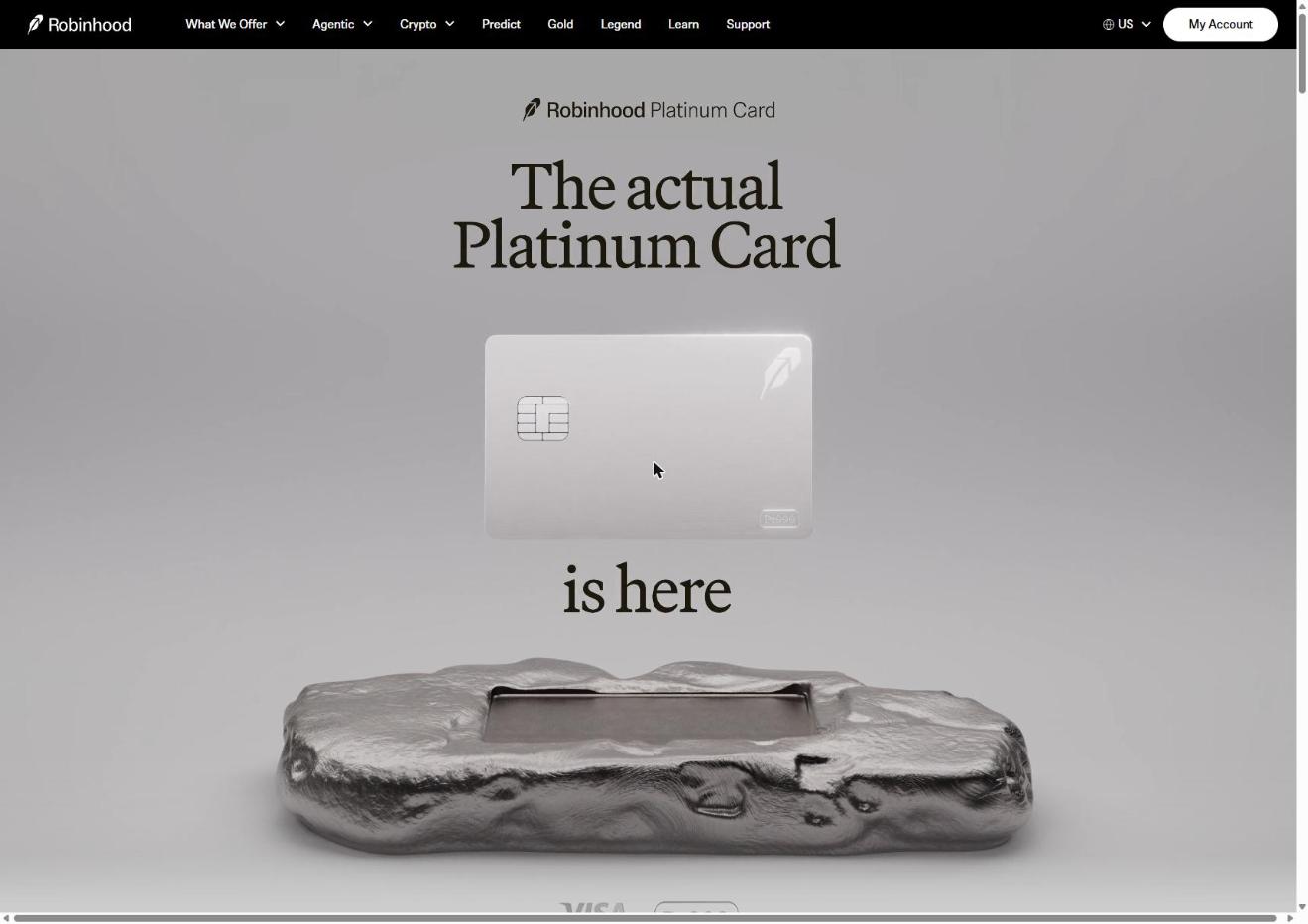
Worth watching: Robinhood has also announced a Robinhood Platinum Card — a $695/year premium card with 5% back on dining, elevated travel rewards, and lounge access — but as of this writing it’s listed as “coming soon” on Robinhood’s site, with no public launch date. It’s not available to apply for yet, so it doesn’t change today’s decision, but it’s a sign Robinhood is building out a full card lineup.
Either way, the Robinhood Gold Card has rewritten what a “no annual fee” cash back card can offer. Whether it’s the right card for you depends on where your money — and your investments — already live.