AI stock analysis means using an AI tool to do the slow parts of researching a stock: reading the financials, comparing a company with its rivals, screening for stocks that fit your rules and summarizing the news. It can turn an evening of spreadsheets into a few minutes. It can’t tell you what a stock will do next.
We put AI stock analysis to the test on one real stock, using Tykr’s AI Helper from start to finish, and we’ll walk you through exactly what we asked and what came back. If you’re new to researching stocks, Investor.gov’s guide to researching investments is a good primer to keep open alongside this one.
In this article, we’ll cover what AI stock analysis can do, how to analyze a stock with AI step by step, the prompts that work and the tools worth using.

Get a FREE stock worth up to $200 the moment you fund a new account with just $10, plus up to $15,000 more per year in free stock when you refer friends. U.S. residents only.
- U.S. stocks, ETFs, options, and cryptos, all commission-free
- Excellent for beginners and advanced investors
- Cash management account and credit card
- Upgrade to Gold for better rates on cash, margin, and a 3% IRA contribution match
- SIPC protected up to $500,000, plus FDIC coverage on uninvested cash
- Connect your favorite AI agent directly to your account and let it research, monitor, and trade for you with a dedicated funded account and a one-tap kill switch you control
- Predictive Markets: Trade real-time "Yes/No" event contracts on sports, politics, weather, and finance. Put your read on the world to work, with instant settlement when the outcome hits
What AI stock analysis can do
Most AI stock analysis tools do some mix of four jobs. Each one saves time, and each one still needs you to check the result.
Reading financial statements
AI can pull the numbers that matter out of a company’s financial reports, like profit margins, debt and return on invested capital, and explain what they mean in plain English. That’s fundamental analysis without the 10-K open in another tab.
Comparing companies
Ask for two stocks side by side and a good tool lines up the same metrics for both. It’s the fastest way to see which of two rivals is more profitable, more indebted or more expensive.
AI stock screener
Instead of setting a dozen filters by hand, you type what you want, like “discount stores with a margin of safety above 5%”, and the AI builds the screen. Check the results before you trust them. When we ran that exact request in Tykr, all five matches were small companies listed in Japan, Israel and Spain, which isn’t what most US investors had in mind.
Summarizing the news
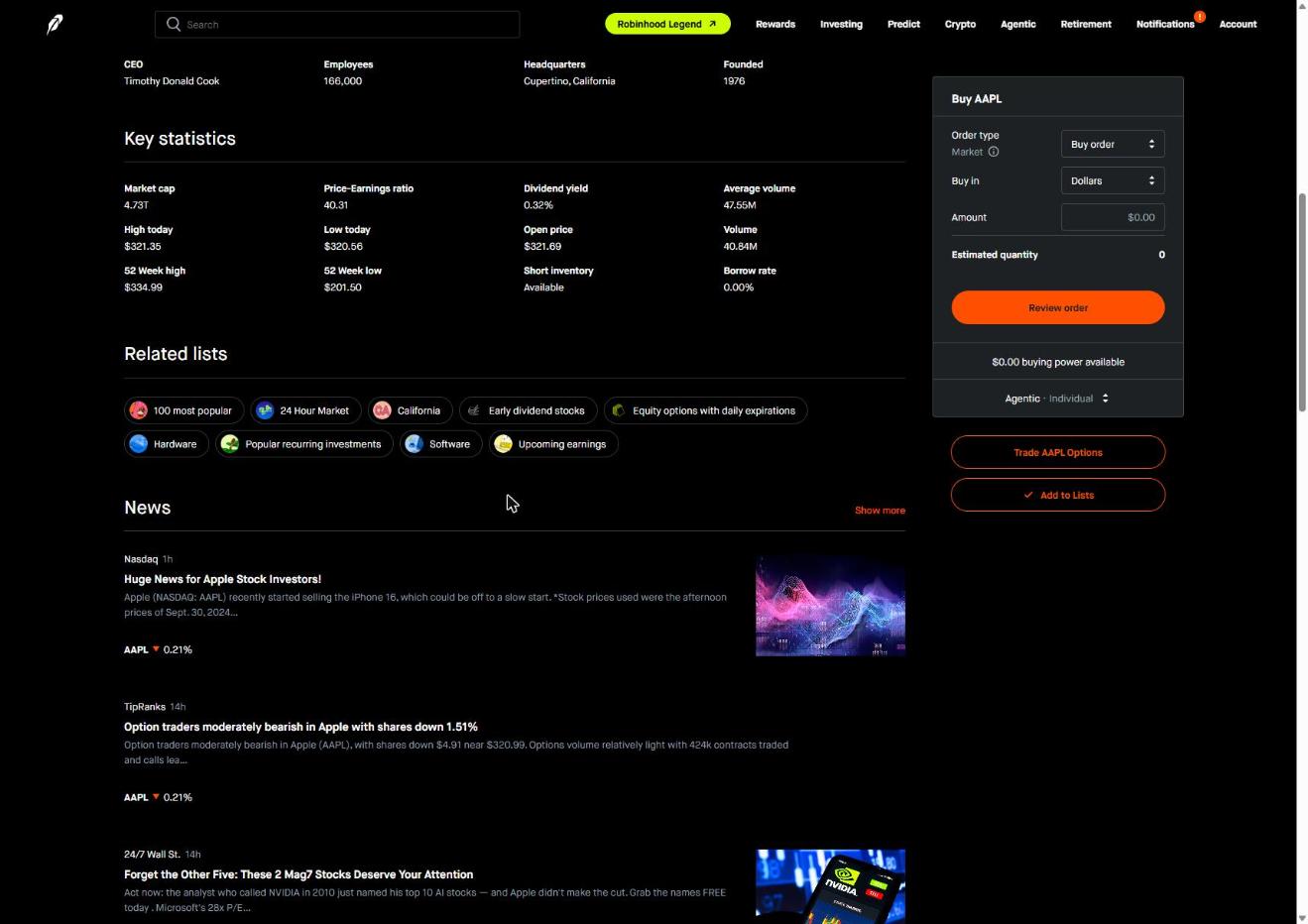
Some tools watch the stocks you own and summarize the headlines that might affect them. Robinhood’s Cortex does this inside your brokerage account, next to the stock’s key statistics.
How to do AI stock analysis, step by step
Here’s the AI stock analysis process we followed in Tykr, using Walmart as the example. We picked Walmart because almost everyone knows the business, not because it’s a stock to buy. As you’ll see, Tykr doesn’t rate it as one either.
Step 1: Start with a question, not a ticker
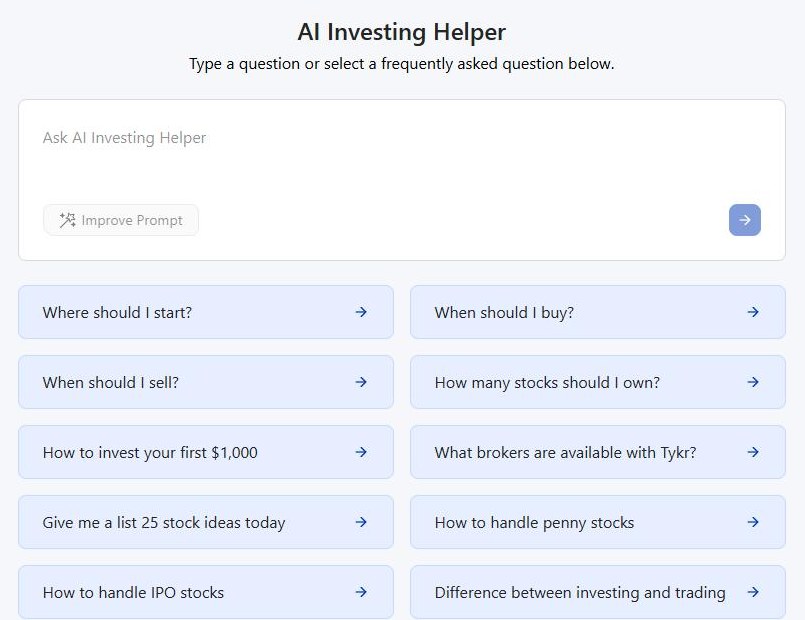
Tykr’s AI Helper opens with a list of starter questions like “Where should I start?”, “When should I buy?” and “How many stocks should I own?”. If you’re a beginner, start there. The answers explain Tykr’s method before you look at a single stock, so the ratings make sense when you get to them.
Try Tykr’s AI stock analysis free for 30 days
Step 2: Check the business
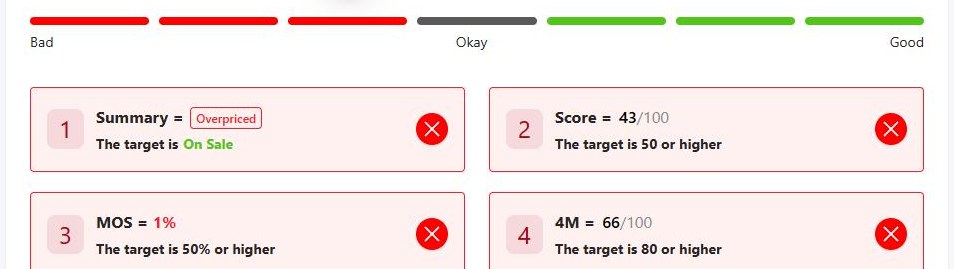
Open the stock and look at the Score first. It measures the company’s financial strength out of 100, based on its return on invested capital and how fast its equity, earnings, sales and cash have grown. Walmart scored 43, just below the 50 that Tykr’s own checklist asks for.
Step 3: Check the price
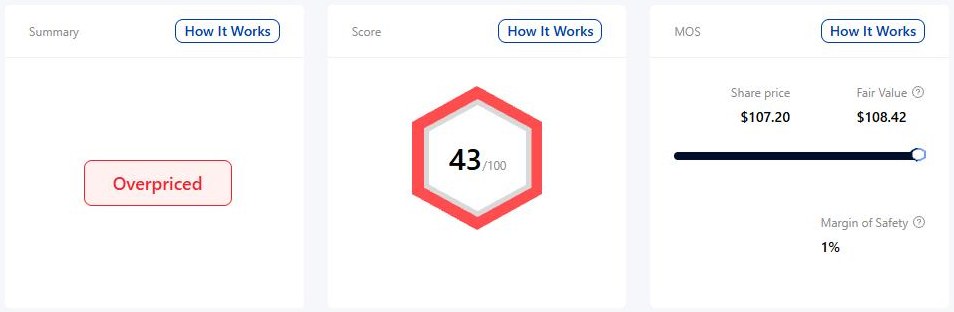
Next is the margin of safety, the gap between the share price and Tykr’s estimate of fair value. Walmart’s share price was $107.20 and its fair value came out at $108.42, a margin of safety of just 1%. Combine a middling Score with almost no margin of safety and Tykr labels the stock Overpriced.
Treat that label as a research flag, not an instruction. Tykr’s fair value leans heavily on past earnings growth, and the price we saw was two days old. Our Tykr Review: Can This App Help You Find Undervalued Stocks? walks through the math behind it.
Then run the checklist. Tykr’s The 7 lists seven targets and marks each one pass or fail. Walmart passed three: its five-year return beat the 80% target, its earnings per share rose three quarters in a row and it beat earnings estimates three quarters in a row. It missed on the rating, the Score, the margin of safety and the 4M score.
Step 4: Compare it with a rival
One stock on its own doesn’t tell you much. We asked the AI Helper to compare Target and Walmart, and it came back with both ratings and a table of fundamentals in under a minute.
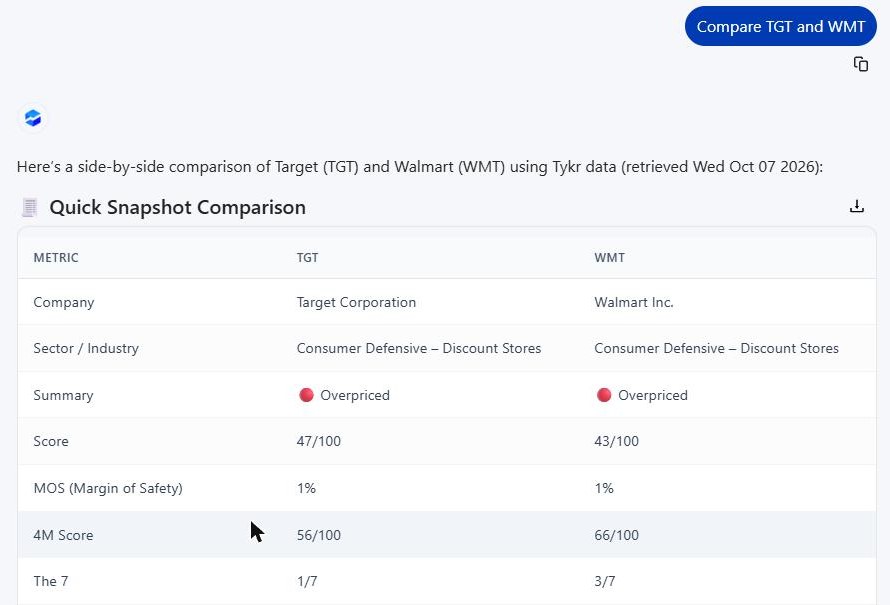
Both were rated Overpriced with a 1% margin of safety. Target had the slightly higher Score, 47 against 43, a lower P/E of about 16 against Walmart’s 39 and a higher net profit margin. Walmart scored better on Tykr’s 4M score and on The 7. Neither looked cheap by Tykr’s method, and the comparison makes it clear why.
One warning about AI answers: Tykr’s AI also told us that a higher Score means a safer investment and a higher margin of safety means higher potential returns. Those are Tykr’s own rules of thumb, not facts about the future. Read the numbers, and take the commentary with a pinch of salt.
Compare two stocks with Tykr’s AI Helper, free
Step 5: Act in your brokerage account
Tykr is a research tool, so you can’t buy anything in it. When you’re ready, you place the trade at your broker. Tykr connects to more than 40 brokers, Robinhood included, so your holdings show up with their ratings.
Robinhood has its own AI too. Gold members ($5 a month) get Cortex, which can build a stock screener from a plain-English question and set up an order for you to review. Robinhood is clear that Cortex won’t give buy or sell recommendations or predict prices.
Open and fund a Robinhood account to act on your research
Can AI pick stocks?
AI stock analysis can rank stocks, screen them and explain them. It can’t know which ones will go up. Every AI stock picker is applying a set of rules to past data, and the future doesn’t have to follow the past.
The tools we used say the same thing about themselves. Robinhood says Cortex can’t predict future price moves. Tykr’s AI ends its answers with “AI is not financial advice,” and Tykr’s homepage says it isn’t a get-rich-quick scheme. If an app promises AI stock picks that beat the market, be very skeptical.
Can ChatGPT analyze stocks?
A general chatbot can explain what a P/E ratio means, summarize an annual report you paste in or help you write a list of questions about a company. That’s genuinely useful.
Where it falls down is the numbers. A chatbot may not have current prices or the latest quarter’s results, and it can state an out-of-date figure with total confidence. For AI stock analysis, a tool built on live financial data, like Tykr or Robinhood’s Cortex, is a safer place to start. If you use a chatbot, check every number it gives you against the company’s filings.
AI stock analysis prompts to try
Good prompts ask the AI to explain or compare, not to predict. These worked well in Tykr’s AI Helper:
- “Compare [stock] and [rival].”
- “Explain [stock]’s rating in plain English.”
- “Show only [industry] stocks with a margin of safety above 5%.”
- “What drives the difference in P/E ratios between [stock] and [rival]?”
- “How many stocks should I own?”
Skip prompts like “Which stock will go up?” You’ll either get a refusal or an answer that sounds more certain than it should.
The best AI for stock analysis
Tykr is the best AI stock analysis tool for beginners we’ve tried. The AI Helper explains its ratings instead of just showing them, the checklist gives you a repeatable process and there’s a 30-day free trial. Plans start at $14.99 a month, and AI questions use credits, with 30 on Premium.
Robinhood Cortex is the pick if you want AI inside your broker. You can go from a plain-English screen to a drafted order without leaving the app, as long as you have Gold.
The best way to learn what AI stock analysis can do is to run it on a stock you already own. You’ll see the ratings, the checklist and the comparisons for a company you know, and you’ll find out quickly how much the AI adds!
Run Tykr’s AI on a stock you own, free for 30 days
FAQs
Yes. AI tools can read a company’s financials, compare it with rivals, build stock screens from plain-English requests and summarize news. You still need to check the numbers and make the decision yourself.
For beginners, Tykr’s AI Helper is the easiest we’ve tested, because it explains its ratings in plain English. If you want AI inside your brokerage account, Robinhood Cortex is available to Robinhood Gold members.
It can explain financial terms and summarize reports you give it, but it may not have current prices or recent results. Check any number a general chatbot gives you against the company’s filings.
No. AI can rank and screen stocks using past data, but it can’t know what prices will do. Robinhood says its Cortex assistant can’t predict future price moves.
Some of it is. General chatbots have free tiers, and Tykr offers a 30-day free trial. After that, Tykr plans start at $14.99 a month, and Robinhood’s Cortex comes with Gold at $5 a month.