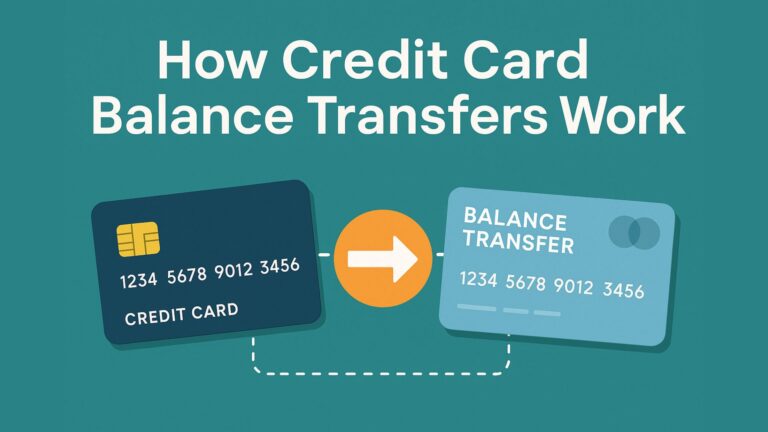
Americans are carrying over $1 trillion in credit card debt, according to the Federal Reserve. With average annual percentage rates (APRs) above 20%, many consumers are searching for ways to manage outstanding debt more effectively. That’s where a balance transfer credit card comes in.
A credit card balance transfer allows you to move high interest debt from one credit card account to another with a lower introductory APR—sometimes even 0%. This balance transfer process is regulated by the Credit CARD Act of 2009, making it a safe financial tool when used wisely.
The main purpose is simple: consolidate debt, save money on interest charges, and pay off the balance faster. Balance transfers can also simplify your finances by turning multiple credit card balances into one payment.
Who Qualifies for a Balance Transfer?
Not everyone will qualify for the best balance transfer offers. Most credit card issuers require good or excellent credit, typically a FICO score of 670 or higher. Card issuers may also limit the transfer amount to a percentage of your available credit. Knowing this before account opening helps set realistic expectations.
Benefits of Using a Balance Transfer Card
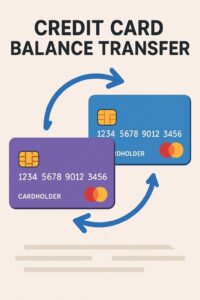
The clearest benefit is saving money. If you owe $5,000 in credit card debt at a 20% interest rate, you’d pay about $1,134 in interest charges over 24 months. By moving that card balance to a 0 intro APR balance transfer card for 18 months with a 3% balance transfer fee, you could potentially save nearly $900.
These cards also:
- Help you pay off existing debt faster by reducing or eliminating interest.
- Simplify monthly payment management with one credit card account.
- Potentially improve credit scores if you keep your old card account open, lowering your overall credit utilization ratio.
Steps to Perform a Credit Card Balance Transfer
- Compare offers. Look for cards with a promotional APR (often 0%) for at least 12–18 months and a reasonable transfer fee (usually 3%–5%). Check out this article for the best credit cards for college students.
- Apply for the new card. Approval usually requires good or excellent credit and a hard credit inquiry during account opening.
- Request the balance transfer. Provide the account number of your other account and the transfer amount.
- Begin making payments. Once the balance transfer work is complete—usually in 5–7 days—keep paying your old card until the full transferred balance posts.
Managing Your Transferred Balance
A balance transfer only works if you stick to the plan. Make at least minimum payments on time to keep your promotional interest rate. Pay off the entire balance during the introductory period, because once the promotional period ends, the standard interest rate (often 20%+) will apply to any unpaid balance.
Avoid adding more debt with new purchases on the balance transfer card, since they may not qualify for the introductory or promotional APR.
Potential Costs and Fees
While balance transfers can save money, they’re not free:
- Balance transfer fee: Usually 3%–5% of the transfer amount.
- Annual fee: Some cards charge one, reducing overall savings.
- Standard APR: Applies after the introductory period ends.
- Late fees and penalty APRs: Missing payments can void your 0 intro APR balance transfer offer.
Always calculate whether the transfer fee outweighs the potential savings.
Common Pitfalls to Avoid

- Assuming you can transfer more than one balance from the same issuer. Most credit card companies block this.
- Closing your old credit card account too soon, which can hurt credit scores.
- Forgetting about deferred interest traps on store cards where the promotional rate expires and retroactive interest is applied.
- Making late or missed minimum payments, which can cancel your promotional APR.
- Applying for too many balance transfer cards, which can lower credit scores due to multiple hard inquiries.
Impact on Your Credit Score
Opening a new credit card can result in a hard inquiry, which may lower your score slightly. Your average account age may also decrease. However, keeping your existing credit cards open after transferring balances can improve your credit utilization ratio—a key factor in credit scores. Over time, paying down outstanding debt should outweigh the short-term dip.
Alternatives to Balance Transfers
A credit card balance transfer isn’t the only way to consolidate debt. Alternatives include:
- Personal loan: Fixed rates and terms, useful for structured payoff of existing debt.
- Debt management plans: Coordinated through credit counseling agencies.
- Debt snowball/avalanche methods: Self-managed repayment of more than one balance.
- Auto loans or home equity loans: May offer lower interest rates but involve other risks.
- Bankruptcy: A last resort for unmanageable outstanding debt.
How to Maximize the Benefits

- Pay off the full transferred balance within the promotional period.
- Set up autopay for minimum payments to avoid losing the promotional rate.
- Use a personal finance calculator to plan how much debt you can potentially pay during the introductory APR window.
- Don’t add more debt to either your new card or old card accounts.
FAQs
They may cause a temporary dip due to account opening, but paying down existing debt can help your score long-term.
Usually no. Most card issuers prohibit transfers within the same company.
Any unpaid balance will accrue interest at the card’s standard annual percentage rate.
Some credit card companies allow this, but it depends on the balance transfer offer.
Yes, issuers often cap transfers based on your available credit.
Rank of Top Stock Newsletters Last 3 Years, as of June 27, 2026
We are paid subscribers to dozens of stock and option newsletters. We actively track every recommendation from all of these services, calculate performance, and share our results of the top performing stock newsletters whose subscriptions fees are under $500. The main metric to look for is "Return vs S&P500" which is their return above that of the S&P500. So, based on June 27, 2026 prices:
Best Stock Newsletters Last 3 Years' Performance
| Rank | Stock Newsletter | Picks Return | Return vs S&P500 | Picks w Profit | Max % Return | Current Promotion |
|---|---|---|---|---|---|---|
| 1. |  Alpha Picks | +108% | +85% | 72% | 1,571% | September, 2026 Promotion: See all their picks & get $124 off |
| Summary: 2 picks per month based on Seeking Alpha's Quant Rating; consistently beating the market every year since launch; tells you when to sell and they have sold almost half. See complete details in our Alpha Picks Review. Or get their Premium service to get their QUANT RATINGS on your stocks to better manage your current portfolio--read our Is Seeking Alpha Worth It? article to learn more about their Quant Ratings. | ||||||
| 2. |  Zacks Value Investor | +36% | +22% | 44% | 441% | September, 2026 Promotion: $1, then $495/yr |
| Summary: 10 stock picks per year on January 1st based on Zacks' Quant Rating; Retail Price is $495/yr and includes 6 different services including those below. Read our Zacks Review. | ||||||
| 3. | Zacks Top 10 | +36% | +22% | 77% | 170% | September, 2026 Promotion: $1, then $495/yr |
| Summary: 10 stock picks per year on January 1st based on Zacks' Quant Rating; Retail Price is $495/yr and includes 6 different services. Read our Zacks Review. | ||||||
| 4. |  Action Alerts Plus | +31% | +12% | 64% | 449% | Current Promotion: None |
| Summary: 100-150 trades per year, lots of buying and selling and short-term trades. Read our Jim Cramer Review. | ||||||
| 5. |  Moby.co | +39% | 10% | 62% | 1,566% | September, 2026 Promotion: Get #1 Stock Pick Free |
| Summary: All it requires is an email address to get their #1 stock pick free; 60+ stock picks per year, segmented by industry; consistently beating the market every year; retail price is $365/yr but save try it for $99. Read our Moby Review. | ||||||
| 6. |  TipRanks SmartInvestor | +19% | +8% | 57% | 361% | Current Promotion: Save $180 |
| Summary: About 1 pick/week focusing on short term trades; Lifetime average return of 355% vs S&P500's 149% since 2015. Retail Price is $379/yr. Read our TipRanks Review. | ||||||
| 7. | Zacks Home Run Investor | +10% | +5% | 42% | 427% | September, 2026 Promotion: $1, then $495/yr |
| Summary: 40-50 stock picks per year based on Zacks' Quant Rating; Retail Price is $495/yr. Read our Zacks Review. | ||||||
| 8. | IBD Leaderboard ETF | 11% | -1.8% | n/a | n/a | September, 2026 Promotion: NONE |
| Summary: Maintains top 50 stocks to invest in based on IBD algorithm; Retail Price is $495/yr. Read our Investors Business Daily Review. | ||||||
| 9. | Zacks Under $10 | +1% | -2% | 35% | 263% | September, 2026 Promotion: $1, then $495/yr |
| Summary: 40-50 stock picks per year based on Zacks' Quant Rating; Retail Price is $495/yr. Read our Zacks Review. | ||||||
| 10. | Dogs of the Dow Strategy | +6% | --7% | 50% | 34% | Current Promotion: None |
| Summary: Buy the 10 highest yielding dividends stocks in the Dow Jones Industrial Average on January 1st and sell on Dec 31st each year. | ||||||
| 11. |  Stock Advisor | +7% | -17% | 59% | 141% | September, 2026 Promotion: Get $100 Off |
| Summary: 2 picks/month and 2 Best Buy Stocks lists focusing on high growth potential stocks over 5 years; Retail Price is $199/yr. Read our Motley Fool Review. | ||||||
| 12. | Rule Breakers | +11% | -18% | 51% | 208% | Current Promotion: Save $200 |
| Summary: Rule Breakers is included with the Fool's Epic Service. Get 5 picks/month focusing on disruptive technology and business models; Lifetime average return of 355% vs S&P500's 149% since 2005; Now part of Motley Fool Epic. Read our Motley Fool Epic Review. | ||||||
| Top Ranking Stock Newsletters based on their last 3 years of stock picks covering 2026, 2025, 2024, and 2023 performance as compared to S&P500. S&P500's return is based on average return of S&P500 from date each stock pick is released. NOTE: To get these results you must buy equal dollar amounts of each pick on the date the stock pick is released. Investor Business Daily Top 50 based on performance of FFTY ETF. Performance as of April 5, 2026. | ||||||