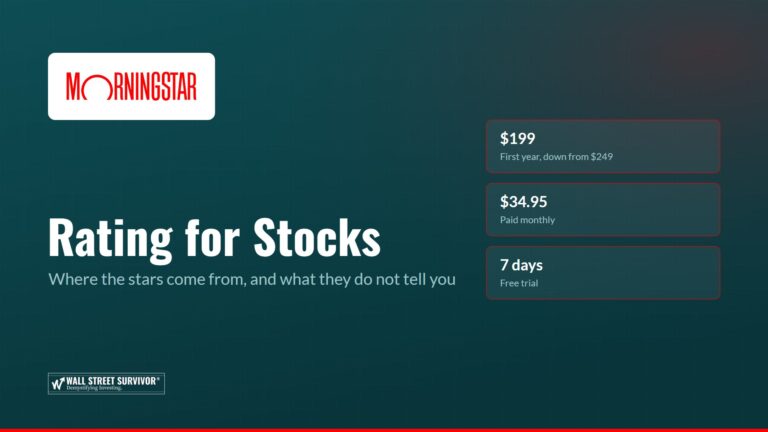
The Morningstar Rating for stocks runs from one star to five. What surprises people is that it isn’t a vote, a ranking, or an analyst’s mood. It’s arithmetic. Morningstar works out what it thinks a company is worth, compares that to what the share is trading at, and the gap between those two numbers is the rating.
Five stars means the stock is trading well below what Morningstar’s analysts think it’s worth. One star means it’s trading well above. Three stars means the price and the estimate are roughly in line.
So the rating is a statement about price, not about company quality. A great business can sit at two stars because it’s expensive, and a mediocre one can hit five because it’s cheap. That distinction is the single most useful thing to understand here, and the SEC’s guide to analysing analyst recommendations is a good companion read on how to treat any rating system.
In this article, we’ll walk through where the star rating comes from, what feeds the fair value estimate behind it, and how the whole thing changes when you move from stocks to funds.

Click the button above. the $50 discount is applied automatically at checkout, bringing your first year to ~$199 instead of $249.
If the price still shows $249 at checkout, enter promo code PARTNER1 (or PARTNER) in the discount field to apply it manually.
- Independent research on 1,600+ mutual funds & ETFs, with no conflicts of interest
- Portfolio X-Ray reveals hidden overlaps, sector concentration & fee drag
- 120+ global analysts covering ~1,000 stocks with fair value estimates
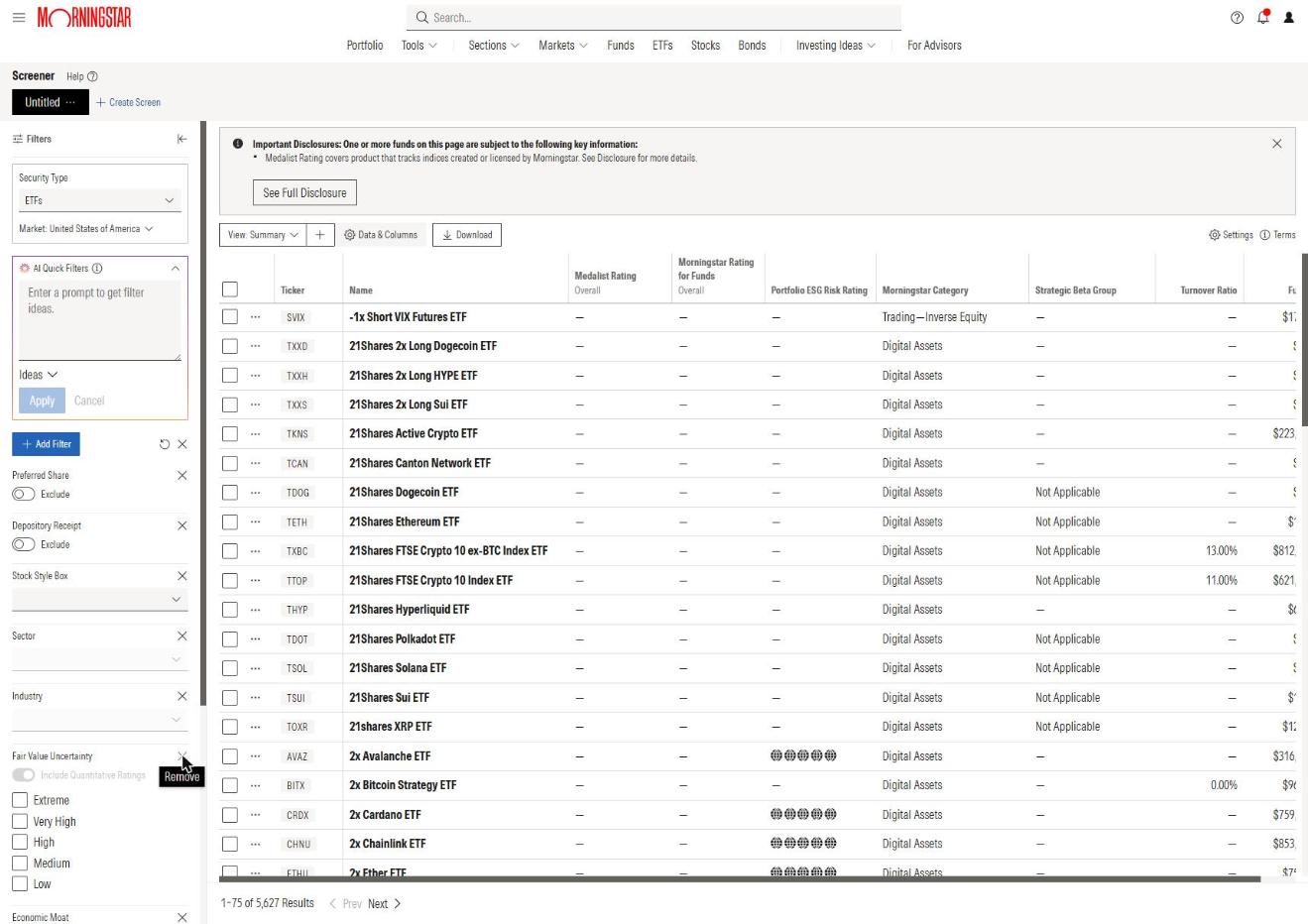
- Advanced stock, fund & ESG screeners with 200+ data points
- Access via web, iOS & Android, with watchlists and portfolios syncing across devices
Where the stars actually come from
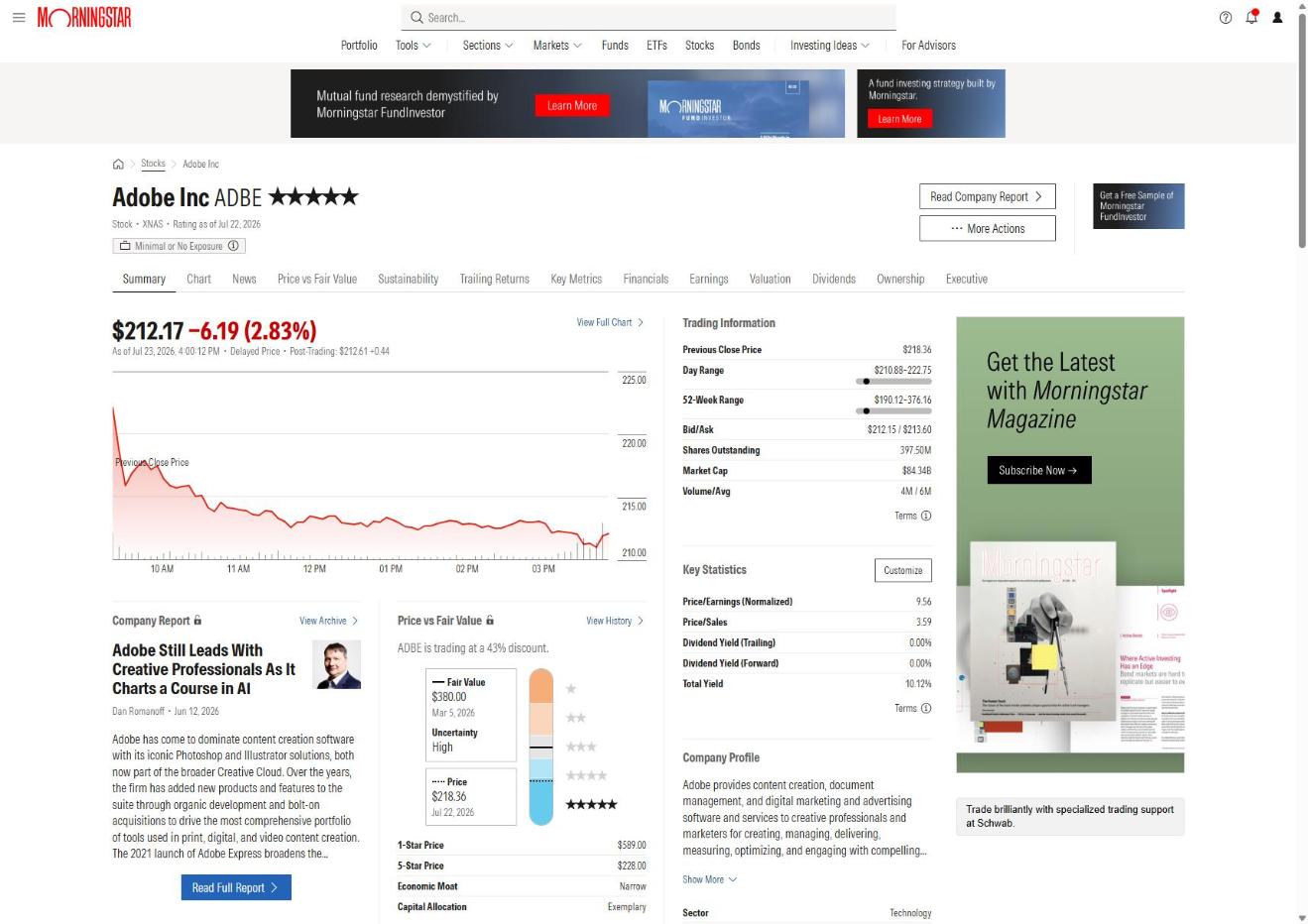
Everything starts with the fair value estimate. Morningstar’s analysts build a projection of the cash a company will generate over its life and discount it back to a figure per share. That figure is the fair value estimate, and it’s published on the stock’s page alongside the current price.
Divide the market price by the fair value estimate and you get the price-to-fair-value ratio. Below 1.0 and the stock looks cheap on Morningstar’s numbers. Above 1.0 and it looks expensive. The star rating is that relationship, banded into five steps.
Because the price moves every day and the fair value estimate doesn’t, star ratings shift on their own. A stock can go from three stars to four without Morningstar changing its opinion at all. The market just marked it down.
See Morningstar’s ratings with a seven-day free trial
The two inputs that shape the fair value estimate
Two Morningstar concepts do most of the work behind that number, and you’ll see both on any stock page.
The economic moat is Morningstar’s judgment on whether a company can hold off competitors long enough to keep earning good returns. It’s graded wide, narrow, or none. A wider moat means analysts are willing to project strong returns further into the future, which lifts the fair value estimate.
The uncertainty rating is how confident they are in their own estimate. A utility with predictable revenue gets a low uncertainty rating. A biotech firm waiting on trial results gets a high one.
That second one changes the maths more than people expect. A high-uncertainty stock has to fall much further below its fair value estimate before it earns five stars, because Morningstar wants a bigger margin of safety when it’s less sure. Two stocks can be equally cheap on paper and carry different star ratings for that reason alone.
Funds and ETFs use a different system entirely
Here’s where a lot of confusion starts. Morningstar publishes stars for funds too, but they don’t mean the same thing.
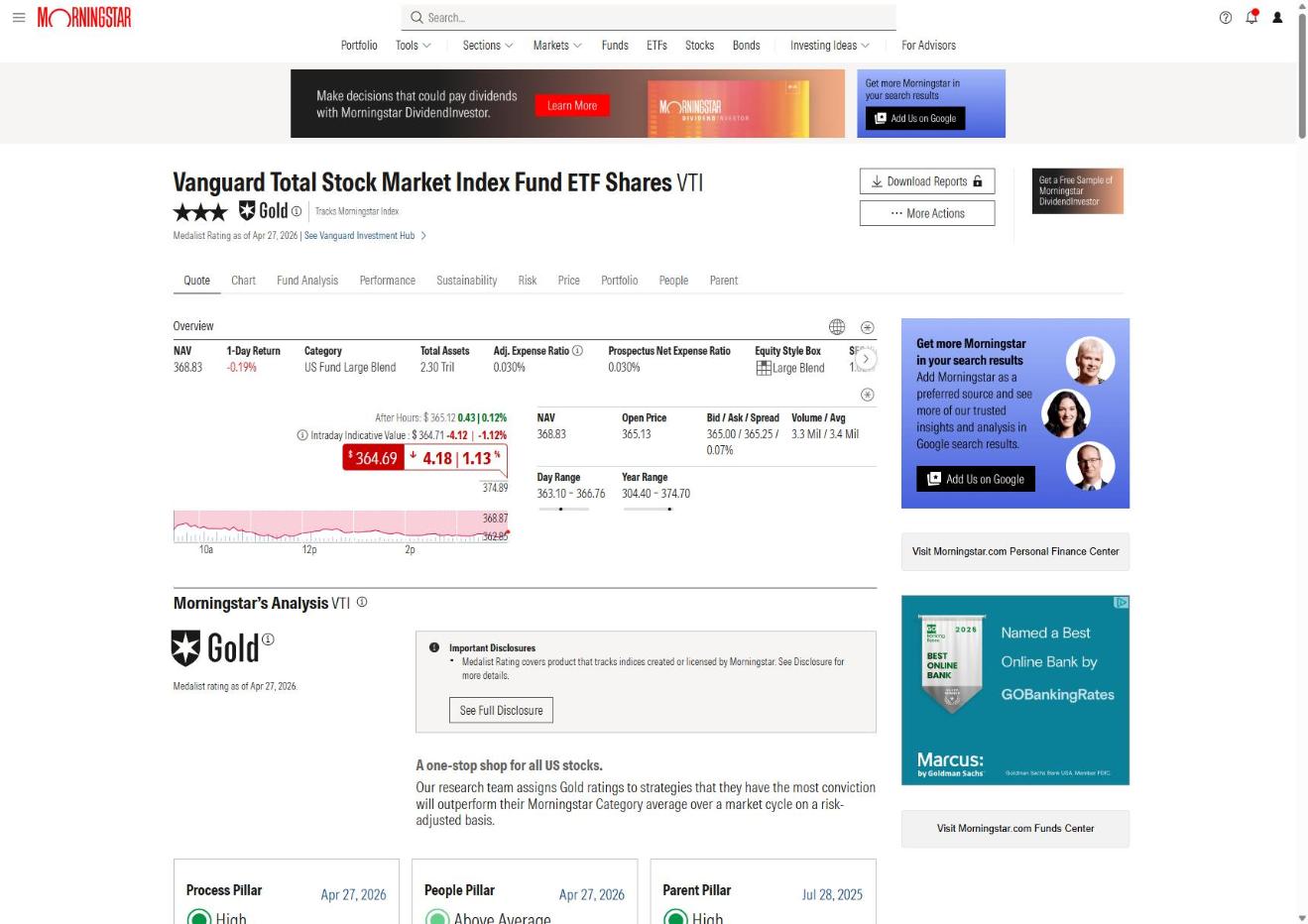
A fund’s star rating is backward-looking. It scores how a fund performed against peers in its category after adjusting for risk and costs. It’s a report card on what already happened, and it says nothing about what comes next.
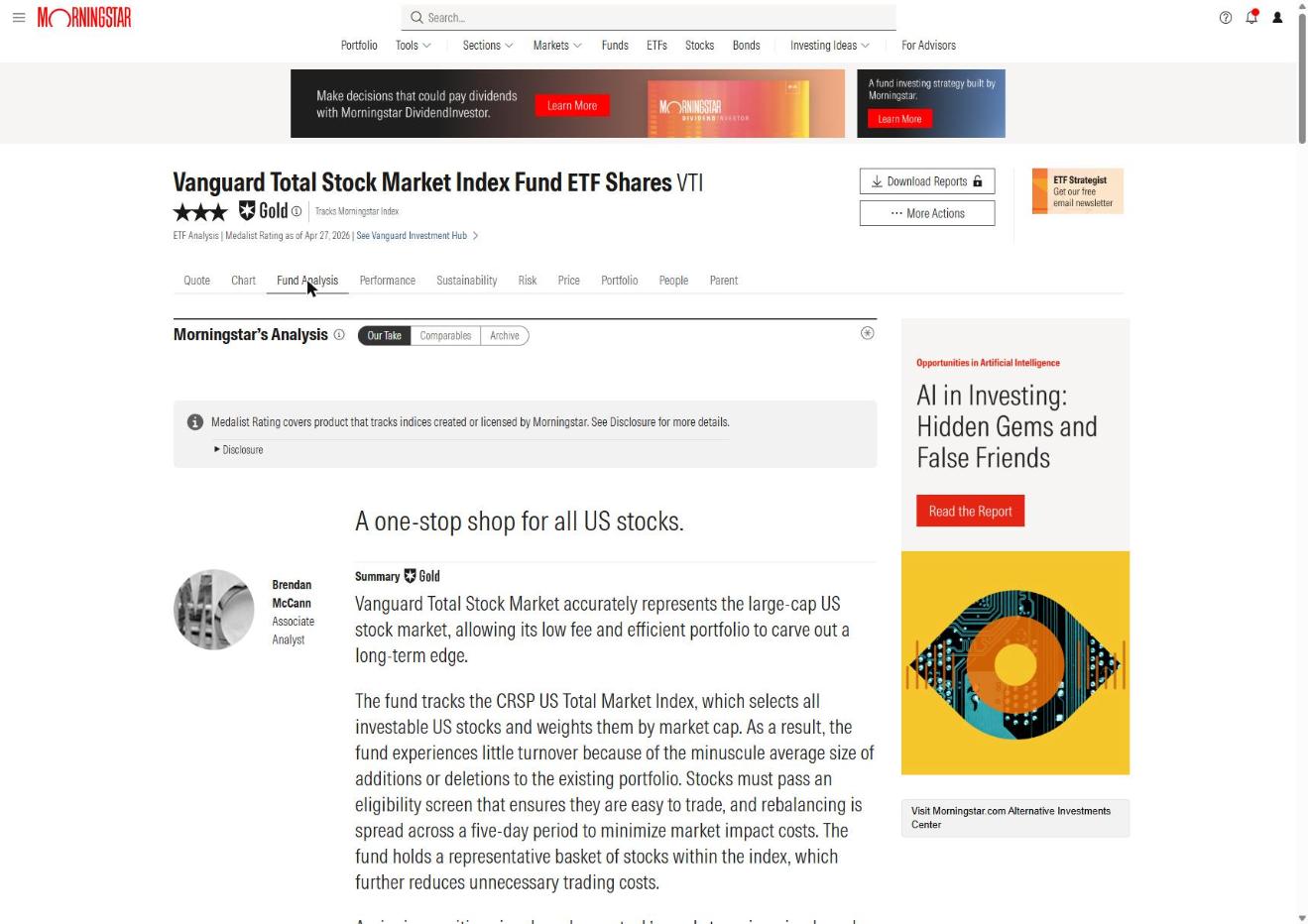
The forward-looking view for funds is the Medalist Rating, which runs Gold, Silver, Bronze, Neutral and Negative. That one is analysts judging whether a fund is likely to beat its category in future, based on its process, the people running it and the parent firm.
So on a stock page, stars are forward-looking valuation. On a fund page, stars are past performance and the medals are the forward view. Mixing those up is easy and it leads people to exactly the wrong conclusion.
Get Morningstar Investor and see the full analyst write-ups
What the rating won’t do for you
Four limits to keep in mind before you lean on it:
- It’s one firm’s estimate. The fair value figure is a projection built on assumptions, and different analysts reach different numbers from the same accounts.
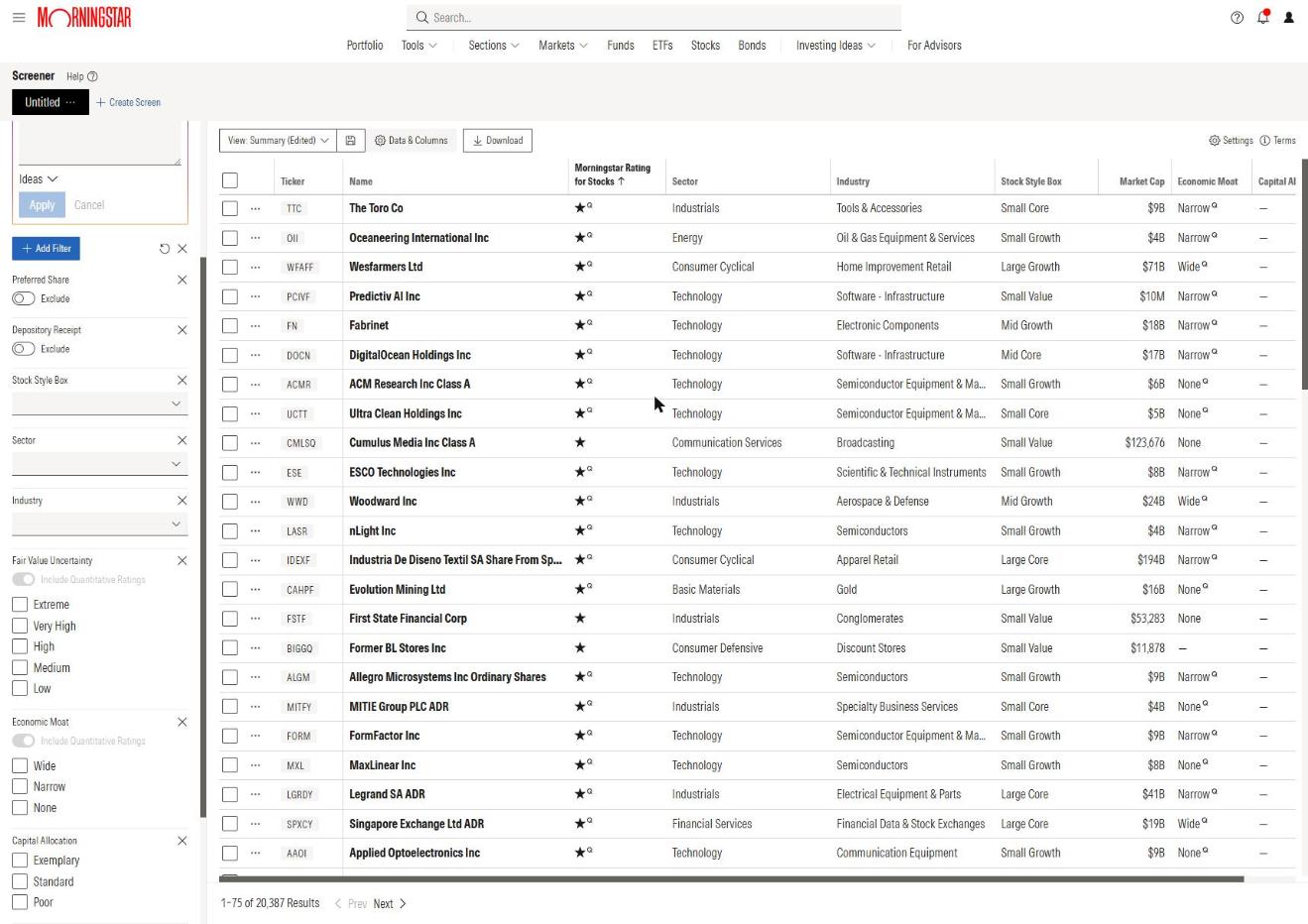
- Coverage isn’t universal. Analysts cover a subset of listed companies. Plenty of stocks have no Morningstar Rating at all.
- It says nothing about timing. A stock can sit at five stars for years while the market disagrees. Cheap can stay cheap.
- It isn’t personal advice. The rating knows nothing about your tax position, your time horizon or what else you already hold.
The useful habit is to read the rating as a starting question, not a conclusion. Why do these analysts think this is worth more than the market does? The write-up behind the rating is where that answer lives, and it’s the part worth paying for.
What Morningstar Investor costs
Ratings and the screeners are free to browse in limited form. The analyst write-ups, the full fair value history and Portfolio X-Ray sit behind Morningstar Investor.
There’s a seven-day free trial, and it ends at 11:59 PM CT seven days after it starts. After that you pick a plan. Paying monthly costs $34.95 a month. Paying for a year up front costs $199 for the first year, down from $249. That works out at $16.58 a month.
Run those two out over twelve months and the gap is hard to ignore. Monthly comes to $419.40. Annual comes to $199.
The first-year discount has conditions attached. Morningstar’s own terms say it’s valid only on the first year of a yearly subscription, can’t be combined with another offer, can’t extend an existing subscription, and needs a valid affiliate partner code. The subscription rate is subject to change without notice. Those figures were accurate when we checked on September 14, 2026. If you’re mostly here for the discount, our guide to the best Morningstar discount offers and promo codes tracks what’s live.
Start your free trial and read the analysis behind the stars
If you take one thing from this page, make it the price-versus-value point. Once you read a star rating as a comment on what a share costs today, the whole system stops being mysterious and starts being useful.
FAQs
It measures price against value. Morningstar analysts set a fair value estimate for the company, then compare it to the current share price. Five stars means the stock trades well below that estimate, one star means well above, and three means roughly in line.
Not necessarily. The star rating comments on price, not quality. A strong business can carry two stars because it looks expensive, and a weaker one can carry five because it looks cheap. Morningstar’s economic moat rating is the closer read on business quality.
No, and this catches people out. A fund’s stars are backward-looking, scoring past risk-adjusted performance against its category. The forward-looking view for funds is the Medalist Rating, which runs Gold, Silver, Bronze, Neutral and Negative.
Because the share price moves daily and the fair value estimate does not. The rating is the relationship between the two, so a stock can move from three stars to four purely on a price fall, with no change to Morningstar’s view of the company.
There is a seven-day free trial. After that, monthly is $34.95 and the first year paid annually is $199 down from $249. That is $16.58 a month. Over twelve months that is $419.40 monthly against $199 annually. The discount carries conditions and rates can change.