ALERT: Are you a U.S. citizen? If not, then you will unfortunately not be able to sign up for a Robinhood account. CLICK HERE TO LEARN ABOUT OUR #1 RECOMMENDED BROKER FOR NON-U.S. CUSTOMERS!
Do you invest in the stock market with a brokerage account? If not, do you want to invest in the stock market?
If your answer was ‘Yes’ to either of those questions…
…you’ve come to the right place!
And we’re here to educate you on companies that are making investors’ lives much, much easier.
There are FREE, cutting-edge apps that have erased the most common excuses for not investing in the stock market.
These technological advances have taken high-commission costs and reduced them to literally nothing.
For the average investor, there has never been a better time to be in the market with the help of these apps.
Robinhood vs Webull: The Verdict (2026)
Choose Robinhood if you want the simplest app, commission-free crypto (65+ coins), a 1%–3% IRA match, and lower margin rates. Choose Webull if you want advanced charting, paper (simulated) trading, and better tools for active options and futures traders. Both offer $0 stock, ETF, and options commissions and no account minimum in 2026. See our is Robinhood safe guide, full Robinhood review, Webull review, and Robinhood vs Fidelity.
Robinhood vs Webull: At-a-Glance Comparison (2026)
| Factor (2026) | Robinhood | Webull |
|---|---|---|
| Stock / ETF / options commissions | $0 | $0 |
| Margin rate | 4.7%–5.75% (Gold) | 8.74% standard / tiered 4.65%–5.95% |
| Account minimum | $0 | $0 |
| Crypto | 65+ coins | Yes |
| Fractional shares | Yes | Yes |
| Retirement (IRA) | Traditional & Roth + 1%/3% match | Traditional & Roth, no match |
| Paper / simulated trading | No | Yes |
| Advanced charting | Basic | Advanced (100+ indicators) |
| Paid tier | Robinhood Gold $5/mo | Webull paid data tiers |
| Best for | Beginners, crypto, IRA match | Active traders, charting, options |
Get a FREE stock worth up to $200 the moment you fund a new account with just $10, plus up to $15,000 more per year in free stock when you refer friends. U.S. residents only.
- U.S. stocks, ETFs, options, and cryptos, all commission-free
- Excellent for beginners and advanced investors
- Cash management account and credit card
- Upgrade to Gold for better rates on cash, margin, and a 3% IRA contribution match
- SIPC protected up to $500,000, plus FDIC coverage on uninvested cash
- Connect your favorite AI agent directly to your account and let it research, monitor, and trade for you with a dedicated funded account and a one-tap kill switch you control
- Predictive Markets: Trade real-time "Yes/No" event contracts on sports, politics, weather, and finance. Put your read on the world to work, with instant settlement when the outcome hits
As you can imagine, there are many investing apps to choose from.
Some heavenly. Some hellish. And – for the purposes of this analogy – some in purgatory.
So, we decided to save you a whole bunch of time by comparing the very best.
Today we have Robinhood and Webull going head-to-head in our epic investment app showdown.
Here you will learn…
- Where these companies shine
- Where these companies can improve
And after about 5 minutes of reading, you will know which app is the best for saving money and making money.
So, let the games begin: Here’s our review!
In this Robinhood vs Webull comparison, we analyze trading tools, fees, commissions, asset availability, security, and user experience to help you decide which trading app is better for your investing style. Whether you are a beginner investor or an active trader, understanding the differences between Webull and Robinhood can help you choose the right brokerage platform.
When comparing Webull vs Robinhood, it’s also important to evaluate how each trading platform supports different account types such as taxable brokerage accounts and retirement accounts. While both online brokers provide commission free trading, their approach to personal finance, advanced research, and long-term investing tools differs significantly. This makes understanding Webull vs Robinhood essential for both beginner investors and advanced traders.
Both Webull and Robinhood are popular stock market apps and full-featured stock trading platforms that function as powerful online brokerage platforms for modern investors. Each app allows users to open an online brokerage account, trade stocks, ETFs, and options, and access commission free trading through a mobile trading app experience. While both operate as online brokers, their tools and features differ depending on whether you are beginner investors just getting started or active traders looking for advanced functionality.
This investment app comparison focuses on helping users choose the right brokerage platform based on experience level, assets offered, and available advanced trading tools.
Platform Security, Regulation, and Brokerage Services
Both Robinhood and Webull employ security measures to protect users.
Both Webull and Robinhood operate under strict oversight from the Financial Industry Regulatory Authority (FINRA) and the SEC, reinforcing trust and transparency across their brokerage services. While neither platform provides direct access to dedicated financial advisors like traditional brokerage services, both Webull and Robinhood offer strong educational resources and tools to support personal finance decisions, they compensate by offering educational tools, real-time financial news, and responsive customer assistance. For users who prefer direct help, phone support is available, making it easier to resolve account-related or transaction-specific concerns.
Is Robinhood legit?
Robinhood is a licensed broker-dealer which is regulated by the SEC and a member of FINRA. User deposits are insured by the SIPC up to $500,000 including $250,000 in protection for cash deposits.
All data stored on Robinhood is protected with 256-bit encryption.
These security features are important to see because you need to know that your personal information and money will be secure.
But note that this type of insurance does not cover loss in market value (so make wise decisions!)
Now… is Webull safe?
Like Robinhood, Webull is regulated by the SEC, a FINRA member, and insured by the SIPC.
Another similarity is that Webull uses state-of-the-art encryption to protect users’ information and assets.
To learn more about Webull, check out our in-depth review.
Pro tip: If you are thinking about signing up for Webull, do it now. For a limited time only, Webull is giving away two free stocks for signing up and making a deposit. (up to $300).
Trading Platform Tools and Advanced Trading Features
Both Webull and Robinhood offer powerful trading platform experiences through their mobile app and web-based interfaces. These platforms are designed to support everyone from beginner investors and everyday investors to intermediate investors and experienced investors who rely on advanced tools, research tools, and professional research features.
Both platforms also differ in how they deliver more advanced trading tools through their desktop trading platform and mobile app interfaces. Webull provides a more robust trading screen with advanced data, advanced research, and technical indicators, while Robinhood focuses on simplifying basic trades for beginner investors.
Trading Platform Tools Comparison for Active and Beginner Investors
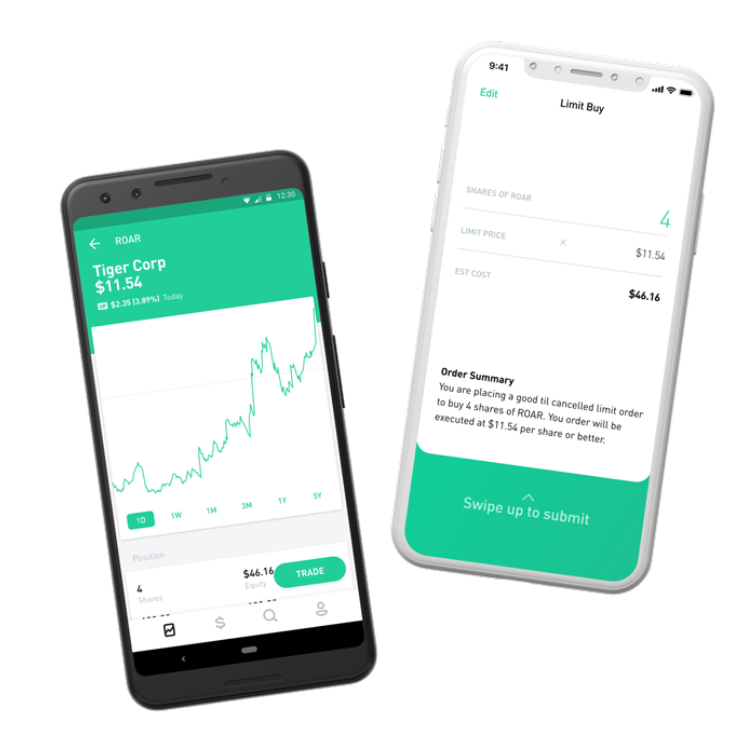
Robinhood’s interface is user-friendly and includes essential trading platform tools for everyday investors.
- Instant deposits
- Trade stocks, ETFs, and cryptocurrency
- Intuitive interface
- 24/5 trading
- 4.25% APY on uninvested holdings
- Robinhood IRA with 1% matching (3% for Gold members)
- Educational resources
- Free stock when you refer friends
Robinhood Gold is a premium subscription that offers additional benefits such as a higher interest rate on uninvested cash, access to advanced research, and margin trading capabilities. Robinhood Gold members also benefit from enhanced buying power, making it attractive for margin traders and active traders who want more flexibility.
With Robinhood Gold, users gain access to enhanced research, higher instant deposits, and margin investing features.
Webull offers more advanced trading tools and features than Robinhood, including:
- Commission-free trading
- Up-to-date market news and prices
- Extended trading hours
- Trade stocks, ETFs, options, bonds, futures, and engage in crypto trading where supported
- Educational resources
- Stock screeners and analysis
- Free stocks
Robinhood Gold also improves the overall experience for users looking to upgrade from a basic trading account.
Webull also offers a powerful desktop platform and integrates with Webull Pay for cryptocurrency trading, giving users flexibility across different trading strategies and asset classes. This desktop trading platform is especially useful for advanced traders who rely on a detailed trading screen and advanced data for making informed decisions.
Either of these apps may be right for you, but Robinhood is more suited to beginners while Webull offers more advanced features.
Technical Analysis, Market Data, and Advanced Charts
Technical analysis is not a requirement for investors, but if you’re interested in deeper market insights, Robinhood doesn’t offer much in the way of advanced charting tools or professional-grade analysis. They do have:
- Articles about the stock market and investing
- Basic stock screeners
- Price alerts
- Basic charting with limited advanced charting tools
Robinhood isn’t the place to go for in-depth research and analysis. By contrast, Webull offers a lot more for experienced users who want professional-grade professional charting tools and analysis.
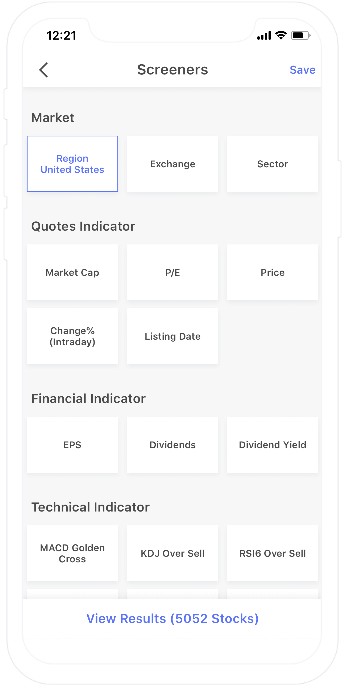
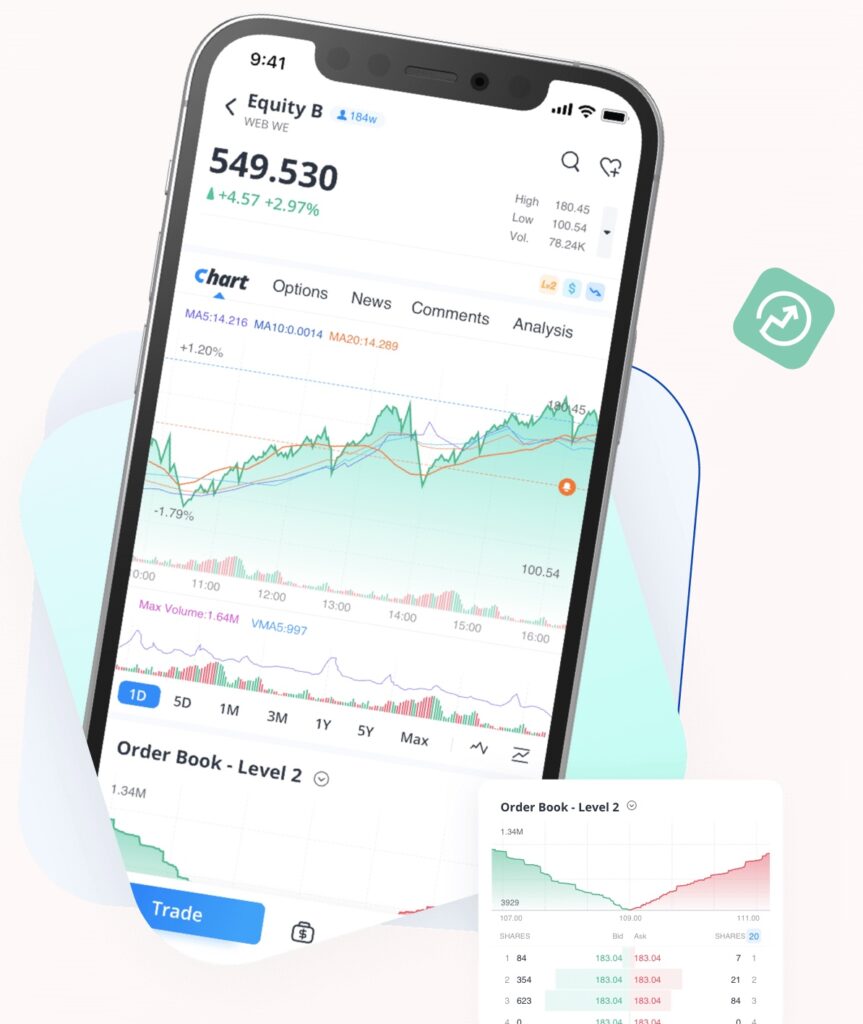
Webull provides advanced technical indicators, real-time market data, and professional-grade advanced charts that appeal to experienced traders and active traders.
- Historical data
- Links to relevant and up-to-date news
- Real time market data
- Advanced charting options, including bar, candlestick, and line charts
- Money flow index
- Bollinger bands
- MACD
- RSI
- Custom alerts
You can also access pre- and post-market trading hours starting at 4:00 a.m. and ending at 8:00 p.m.
And, this trading platform offers a trading simulator (paper trading) to help beginner investors and active traders practice new strategies
Unique Features: Simulated Trading, Fractional Shares, and Desktop Platform
There are a few unique features on each of these platforms.
Webull’s simulated trading (paper trading) feature allows both new investors and experienced traders to practice strategies without risking real money. Both Webull and Robinhood also allow users to trade fractional shares, making investing more accessible. Webull further stands out with a powerful desktop platform designed for advanced investors.
For example, Robinhood has a well-reviewed and simple user interface that removes many of the barriers to investing.
It also offers IRA matching funds, which is great if you’re not working for someone that offers employer matching.
Webull stands out for its outstanding educational content. It has affordable prices for options and advanced options features that you won’t find on Robinhood.
User Experience, Trading Experience, and Platform Accessibility
Both the user experience and accessibility are important on any digital investment platform. Both Webull and Robinhood are beginner-friendly trading platforms.
Both platforms provide a seamless mobile app experience, making stock trading accessible for users on the go.
Robinhood really revolutionized the user experience with its mission of democratizing investments.
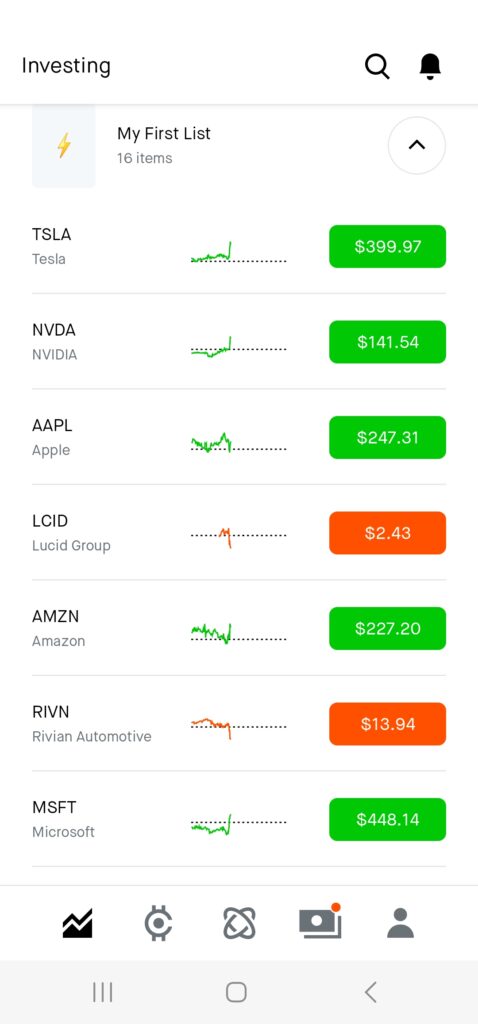
That mission is clear when you look at Robinhood’s clean and easy-to-understand user interface.
There are only a few menu options, making it easy for new users and even people who aren’t familiar with investing to find what they need.
Whether you want to buy your first stock, create a watchlist, learn about investing, or get support, it’s easy to do on the Robinhood app.
We should also note that the Robinhood website is just as clean and easy to use.
Webull is a strong competitor to Robinhood and has a similar mission. Its app is designed to be user friendly.
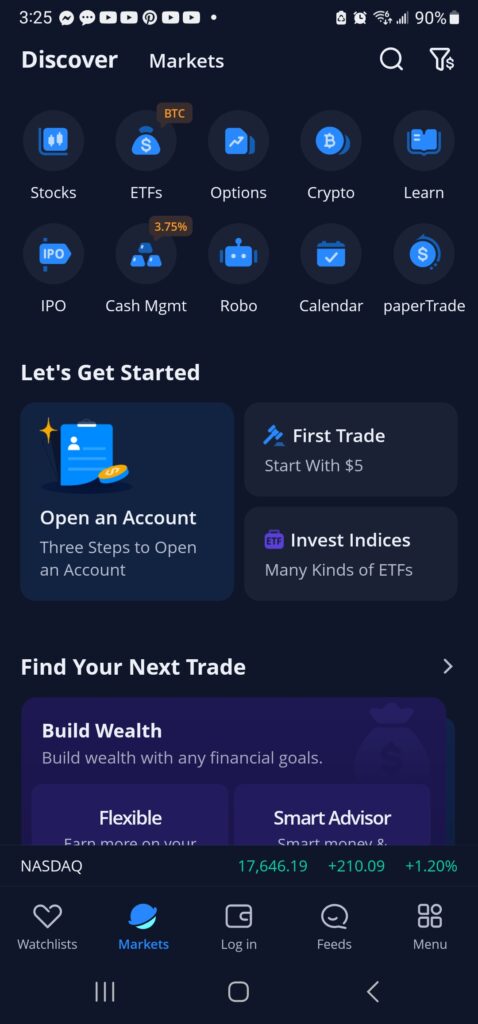
We really like the way the menu is organized here, with easy-to-understand icons.
They have some options that Robinhood doesn’t, such as paper trading and IPOs.
The menu choices at the bottom are nice as well. Even from the first time you log on, you can see where to go to create a watchlist, get market updates, and see your news feed.
In short, both Webull and Robinhood have excellent, user-friendly interfaces that makes their apps accessible and extremely easy to use.
Robinhood vs Webull Fees (2026): Commissions, Margin & Regulatory Costs
By now, you’re probably wondering how much each trading platform charges and what assets you can trade through each brokerage platform.
When comparing Webull and Robinhood, it’s important to understand not just commission free trading, but also how regulatory and exchange fees apply, along with any broker charges that may affect your total trading cost. Both platforms operate as online brokers, and while they advertise free trading, certain mandatory fees still exist.
These regulatory fees are charged by the SEC and FINRA and apply across all brokerage services. In addition, some exchange fees apply depending on the asset being traded, including option contract fees, futures trading fees, and crypto-related transaction costs.
Commission Structure and Zero Commissions Model
Let’s start with commissions.
Both platforms offer commission free trading using a zero-commission pricing model, meaning investors can trade stocks, ETFs, and options without paying traditional brokerage commissions. This free trading model is one of the biggest reasons Webull and Robinhood are so popular among everyday investors and beginner investors alike.
However, commission free does not mean fee-free.
Even though the platforms offer commission free stock and ETF trading, regulatory fees, exchange fees, and small brokerage charges still apply. These are standard across most online brokerage platforms and are unavoidable when executing trades.
This is where understanding brokerage accounts, account types, and fee disclosures becomes extremely important.
Regulatory Fees, Hidden Fees, and Broker Charges
Speaking of fees…
There’s no such thing as completely free trading, even on a commission free trading platform. While both Robinhood and Webull advertise free trading, investors still pay regulatory fees, regulatory and exchange fees, and small broker charges that are passed through directly from market regulators.
In addition to these regulatory fees, investors should also consider account fees, inactivity fees, and potential exchange commission costs that may apply depending on trading activity and account types. These factors can influence the overall fee structures of both platforms, especially for active traders and margin traders.
These include:
- SEC regulatory fees
- FINRA regulatory fees
- Exchange fees apply depending on the trading venue
- Option contract fees
- Futures trading fees
- Margin interest for margin accounts
If you use margin accounts, you will also pay margin interest, which varies depending on your portfolio size and account balance. Margin investing can increase buying power, but it also increases risk and borrowing costs.
Additionally, if you trade during pre market or after-hours sessions, pricing spreads and liquidity conditions can also impact execution quality, even if commissions remain free.
Some fees may also apply to:
- Wire transfers
- Account transfers
- Futures trading contracts
- Cryptocurrency trading
So while both platforms are excellent for low-cost investing, it’s critical to understand how these smaller fees impact your investing journey.
| Webull | Robinhood | |
| Trading commission | 0% | 0% |
| SEC regulatory fee | $0.0000278 * Total $ Trade Amount (Min $0.01) | $0.0000278 * Total $ Trade Amount (Min $0.01) |
| FINRA regulatory fee | $0.000166 per share (equity sells) and $0.00279 per contract (options sells). This fee is rounded to the nearest penny and no greater than $8.30. | $0.000166 per share (equity sells) and $0.00279 per contract (options sells). This fee is rounded to the nearest penny and no greater than $8.30. |
| Options regulatory fee | $0.02815 * No. of Contracts | $0.04 per options contract (buys and sells) |
| Index options | $0.55 per contract; additional fees may apply for some trades | $0.50 per contract for non-Gold members; $0.35 per contract for Gold members |
| Margin trading | 4.74% to 8.74% depending on portfolio size | 4.70% to 5.75% depending on portfolio size |
| Futures | $0.13 to $1.25 per contract, depending on futures type | N/A |
| Wire transfer withdrawal | $25 domestic, $45 international | $25 |
| ACAT transfer (stock transfer) | $75 | $100 |
As you can see, both brokerage platforms have very similar regulatory fee structures. The difference usually comes down to how each platform handles option contract fees, margin interest, and futures trading costs.
If you plan to hold uninvested cash, both platforms offer interest-earning programs, though rates and eligibility vary. This can be an important factor for investors who want their unused funds to remain productive while waiting for trading opportunities.
If all you plan to do is trade stocks and ETFs, they’re the same.
Pro Tip:
Get a free stock when you sign up with Robinhood or Get 20 free fractional shares when you deposit $500 or more with Webull today!
Tradable Assets, Options Trading, and IRA Accounts
Finally, let’s look at which assets you can trade on each investment platform and online brokerage platform.
Both platforms support a range of tradable assets including stocks listed on exchanges like the Nasdaq Stock Exchange, ETFs, options contracts, and cryptocurrency trading. However, neither Webull nor Robinhood currently supports mutual funds, which may impact long-term retirement accounts and diversification strategies.
For investors who rely on mutual funds for long-term diversification, this limitation can be an important consideration when choosing between platforms.
| Webull | Robinhood | |
| Stocks | Yes | Yes |
| ETFs | Yes | Yes |
| Options/Index Options | Yes | Yes |
| Futures | Yes | Yes |
| Cryptocurrency | Yes, through their partnership with Bakkt Crypto Solutions | Yes |
| OTC | Yes | No |
| IRA/Retirement | No | Yes |
As you can see in this chart, both trading platforms are similar in terms of available assets for most brokerage accounts. One key difference is that crypto trading is built directly into Robinhood, while Webull offers crypto trading through a partner platform.
Robinhood supports IRA accounts for long-term investors, while Webull focuses more on advanced options trading and broader tradable assets.
This isn’t an asset class, but we should note that both online brokerage platforms support day trading for qualified brokerage accounts. Make sure you understand the day trading limitations before you start.
Robinhood Gold vs Webull Premium (2026)
Both apps offer a paid upgrade. Robinhood Gold costs $5/month ($50/year) and lowers your margin rate, boosts your cash APY, includes the first $1,000 of margin, and adds a 3% IRA contribution match. Webull’s paid data tiers add Nasdaq TotalView Level II market data plus discounts on index options and futures aimed at active traders. Choose Gold for lower costs and retirement perks; choose Webull’s upgrades for advanced charting and derivatives.
| Feature | Robinhood Gold | Webull (paid tiers) |
|---|---|---|
| Monthly cost | $5/mo ($50/yr) | Free base; paid data add-ons |
| Margin rate (2026) | 4.7%–5.75%, first $1,000 free | Tiered 4.65%–5.95% (8.74% standard) |
| Level II market data | Nasdaq TotalView | Nasdaq TotalView |
| IRA contribution match | 3% with Gold | None |
| Best for | Lower costs + retirement | Active trading + charting |
Account Types, Cash Management, and Fund Transfers
When evaluating Webull vs Robinhood, understanding account types is essential. Both platforms offer taxable brokerage accounts, but only Robinhood currently supports retirement accounts with IRA match incentives.
Neither platform offers traditional cash management accounts in the same way as full-service brokerage services, but both allow users to link bank accounts and manage uninvested cash efficiently.
Investors can also withdraw funds easily, though processing times may vary. These features are especially important for users focused on personal finance and liquidity management.
Customer Service Evaluation
Customer service availability and quality should always be considered when choosing an investment app. So, let’s make a customer service comparison.
Let’s start with Webull.
Webull offers both in-app and website support.
On their website, you can access their help center to find articles and answers to frequently asked questions. You can also send them an email.
In-app support includes email and there’s also a phone number you can call.
We wish they offered live chat, and it’s possible they’ll add it in the future.
What about Robinhood’s customer support?
Robinhood has an in-app support center. They also have 24/7 customer support that you can access from the app or from their website.
The support center has tons of useful articles about everything from how to link your bank account to the specifics of trading every asset that Robinhood offers.
Ideal User Profile
By now, you’re probably wondering who the best users for Webull are.
Webull offers more assets for trading and more complex trades than many other online brokers on the market. For that reason, we’d say that intermediate or experienced users, as well as those in search of more assets to trade, may prefer Webull to Robinhood.
We still think that Webull is beginner-friendly, but this trading platform is especially powerful for active traders.
Who is Robinhood ideal for?
Robinhood really is the ideal stock trading app and investment platform for beginner investors.
It’s easy to figure out. Once your account is verified, you can make your first trade within a few minutes.
Robinhood is also the better choice for anyone who wants an IRA and to take advantage of matching contributions for long-term investing.
Overall, we’d suggest Robinhood for beginners and Webull for more advanced traders who want a broader selection of assets to choose from.
Pros and Cons Summary
To give you the easiest comparison possible, here’s our summary of the benefits and drawbacks of Webull as well as the advantages of Robinhood and its limitations.
Pro Tip:
Get a free stock when you sign up with Robinhood or Get 20 free fractional shares when you deposit $500 or more with Webull today!
What We Love About Each Platform
Let’s start with the good stuff. Here are the benefits of Webull.
- Webull offers a broader array of assets than Robinhood
- The resource library is excellent and makes it easy to learn about every aspect of trading
- Users get access to advanced trading tools
- Stock and ETF trades are commission-free
- Paper trading is available to help new investors learn
And here are the advantages of choosing Robinhood
- There’s no minimum account balance
- Robinhood Gold subscribers get lower fees and additional features
- You can trade cryptocurrency right on the platform
- IRA matching
- 24/7 chat support
What We Don’t Love About Each Platform
Here are some Webull and Robinhood limitations you should know about, starting with Webull.
- You need a separate app to trade cryptocurrency
- No retirement funds or IRA matching
- No live-chat support
- No bonds or mutual funds
Robinhood’s disadvantages are as follows.
- There’s little in the way of third-party research
- Analytical tools are extremely limited
- Trade types are limited when compared to Webull
- No bonds or mutual funds
- No paper trading
Overall, we think that these two services are pretty evenly matched. It depends on what you want.
Pro Tip:
Get a free stock when you sign up with Robinhood or Get 20 free fractional shares when you deposit $500 or more with Webull today!
Final Verdict
Final review, Robinhood vs Webull…
Both apps are excellent at what they offer!
Did you find this conclusion helpful? No?
Okay, okay. I get it. This isn’t kindergarten, where everyone is “special” in their own way. And this sure as hell isn’t soccer where things end in a 1-1 tie.
Ultimately, the Webull vs Robinhood debate comes down to whether you prefer a simplified investment platform or a feature-rich trading platform with more advanced trading tools.
So, which investment app should you choose?
Don’t stress yourself out.
All you need to know your personal situation and what you are looking for in an investment app.
Maybe this will make your decision a bit easier…
- Do you want to trade cryptocurrency and other assets in the same place? Forget about Webull.
- Do you want tools for advanced traders? Forget about Robinhood.
- Do you want to invest in mutual funds through your brokerage account? Forget both.
- Do you have the memory of a goldfish? Read below for a refresher!
Robinhood is excellent because of its simplicity, making it a top stock trading app and investment platform for beginner investors. commission-free trades on many assets, and no account minimums.
If you are a newer trader, we recommend that you sign-up for Robinhood.
Webull is excellent because of its advanced trading tools, making it a powerful trading platform for active traders, commission-free trades on stocks and ETFs, and no account minimums.
For intermediate and advanced traders, we recommend that you sign-up for Webull.
If you prefer to dig deep into investment information, we say that Webull has a slight advantage because of fundamental and technical analysis tools.
But again, the best app depends entirely on your personal needs.
And since Robinhood and Webull offer commission-free trades and no account minimums, there is no harm in trying BOTH to see which works best for you.
There is absolutely no risk or obligation on your part.
Let us know if you are Team Robinhood or Team Webull with a comment below!
FAQs
Yes, stock and ETF trades use a commission free trading model on both trading platforms. Still, there are regulatory fees and may be other fees, so be careful to review the fee disclosure before finalizing a trade.
We think Robinhood has the edge when it comes to suitability for beginners. It has a super-sleek interface, more accessible and immediate support, and fewer trade options.
There is no minimum deposit requirement to open a brokerage account on either online brokerage platform. You can set up your account without making a deposit, and add funds as you choose.
Robinhood users can trade cryptocurrencies using the Robinhood app. Webull only offers crypt trading through a partner, so you’ll need to use a separate all (Webull Pay) for crypto trading.
The answer really depends on what you want. If you’re looking for an all-in-one app where you can trade stocks, ETFs, and crypto, then Robinhood is the better choice. If you want access to a wider array of assets and more complex trades, then Webull has the edge.
Both charge $0 commissions on stocks, ETFs, and options (regulatory fees still apply). The main difference in 2026 is margin: Robinhood charges 4.7%–5.75% (with Robinhood Gold), while Webull charges 8.74% for standard accounts on a tiered 4.65%–5.95% scale.
Robinhood Gold ($5/month) adds lower margin rates, a higher cash APY, bigger instant deposits, and a 3% IRA match. Webull’s paid data tiers add Nasdaq TotalView Level II data and discounts on index options and futures for active traders. Gold is better for cost and retirement; Webull’s tiers are better for advanced charting and derivatives.
Top U.S. Brokers Promotions for 2026

★ ★ ★ ★ ★
✅ Now 23 million users
✅ Cash mgt account and credit card
Free stock up to $200 with new account, plus more free stock with referrals; US residents only.
Open Account Get Free Stock
★ ★ ★ ★ ★
✅ $50 minimum when opening account
✅ Cash mgt account and credit card
Get up to $1,000 in free stock with new account. US residents only.
Open Account &Get Up To $1,000 in free stock.

★ ★ ★ ★ ★
✅ Access to U.S. and Hong Kong markets
✅ Educational tools
Deposit $500 get $30 in NVDA stock; Deposit $2,000 get $100 in NVDA stock; Deposit $10,000 get $200 in NVDA stock; Deposit $50,000 get $400 in NVDA stock.
Get Free Shares
★ ★ ★ ★ ☆
✅ Trade U.S. stocks, ETFs, and crypto
✅ Trades with themed portfolios

★ ★ ★ ★ ☆
✅ Great charts and screeners
✅ Commission-free options trading
$10 and a 30-day complimentary subscription to Webull premium; $200-$30,0000 Tiered Sign up bonus
Learn more
★ ★ ★ ★ ☆
✅ IBKR Lite & Pro tiers for all
✅ SmartRouting™ and deep analytics