Bali at sunrise. A train winding through the Swiss Alps. Street food in Tokyo at midnight.
For most people, travel like this feels like a once-in-a-decade splurge—something you do for a honeymoon or a milestone birthday, then wait years to afford again. But what if it didn’t have to be that way? What if you could fund a serious travel lifestyle every single year, not by winning the lottery, but by investing consistently starting today?
That’s exactly what we’re going to figure out.
We’re not talking about a weekend road trip. We’re talking $10,000, $25,000, maybe $50,000 worth of travel per year—the kind of trips that Instagram travel bloggers take, except yours would actually be funded.
Here’s the math that makes it possible.
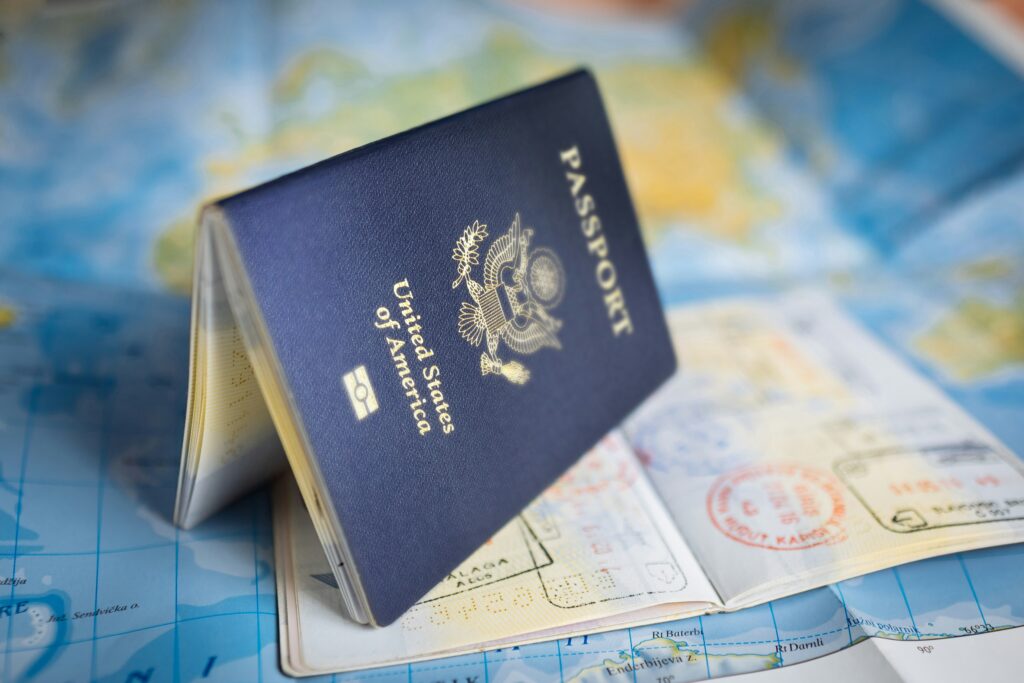
Step 1: How to Save for Travel—The Target Isn’t a Number, It’s a Machine
Most savings goals work like this: save up a lump sum, spend it, start over. That’s exhausting, and it means your travel fund is always competing with your retirement fund.
There’s a smarter way to think about how to save for travel: don’t just save for one trip—build an investment portfolio that can fund travel year after year. You’re not saving for a trip. You’re building a machine that pays for trips forever.
The concept is simple: if you invest enough money and earn consistent returns, you can withdraw a fixed amount every year without ever touching the principal. Your portfolio keeps growing, and your travel budget keeps flowing—indefinitely. For anyone who wants to travel regularly using consistent investing and long-term financial planning—including people working toward financial independence or early retirement—this creates a more sustainable way to travel without draining your savings or adding money stress every time you want to go somewhere.
This is the same logic behind the famous 4% rule, a guideline used by financial planners and the FIRE (Financial Independence, Retire Early) movement. The rule says that if you withdraw no more than 4% of your portfolio per year, your money has historically had a very strong chance of lasting indefinitely.
So instead of asking “how much do I need to save for one big trip?”, we ask: “How large does my portfolio need to be so that 4% of it covers my annual travel budget?” From there, you can work backward by setting a realistic travel budget, calculating your target portfolio, choosing a monthly investment amount based on your timeline and expected returns, finding ways to start traveling sooner by saving faster, and keeping an emergency fund so your travel plans support your bigger financial life instead of derailing it.
Step 2: What’s Your Travel Fund Budget?
Before the math kicks in, you need a number. Here’s a rough breakdown of what different annual travel budgets actually look like in the real world:
| Annual Budget | What It Gets You |
|---|---|
| $10,000 | 2-3 international trips/year, budget-friendly destinations, hostels or Airbnbs |
| $25,000 | 4–6 weeks abroad, mix of mid-range hotels and nicer splurges, flights in comfort class (or 2-3 international trips and 2-3 national trips) |
| $50,000 | Extended travel 2–3 months/year, business class flights, luxury resorts, private tours (or 3-4 international trips and 3-4 national trips) |
| $100,000 | Near full-time travel, five-star hotels, first class, exclusive experiences |
Pick your number. Start by calculating your total estimated expenses, since a reasonable vacation budget depends on your travel plans. Then set a target budget that includes a buffer for unexpected expenses so you’re not caught short.
A little online research makes that number more realistic by checking airfare, lodging, and activity costs in advance.
You can also lower costs by traveling off-season, booking flights and accommodation early, and staying flexible on dates; tracking fares on Google Flights helps you spot pricing trends. Now let’s build the machine.
Step 3: How Big Does Your Portfolio Need to Be for Financial Independence?
Using the 4% rule, the required portfolio depends on the amount of money you want available each year from annual expenses for travel, so the formula is straightforward and follows the same idea as a FIRE number, which is typically 25 times annual expenses:
Required Portfolio = Annual Travel Budget ÷ 0.04
| Annual Travel Goal | Portfolio Needed |
|---|---|
| $10,000/year | $250,000 |
| $25,000/year | $625,000 |
| $50,000/year | $1,250,000 |
| $100,000/year | $2,500,000 |
These figures are for illustrative purposes and reflect travel costs, not total living expenses, but that annual travel amount can still give you a clear savings goal. Many FIRE plans also assume annual withdrawals of about 3% to 4% from savings to retire comfortably.
These numbers sound big, though people in the FIRE community may frame them differently depending on whether they lean toward lean fire or fat fire.
Step 4: Investment Strategies: How Much to Invest Monthly (Starting at 30)
Just like with those jaw-dropping celebrity engagement rings, the secret weapon here is time and compounding. We’ll use a 10% annual return, in line with the stock market’s long-term historical average, investing consistently every month for 35 years until age 65; that monthly amount will vary based on your assumed retirement age and expected income over time.
The formula rewards patience in a dramatic way, which is why the real goal is to start saving early instead of trying to catch up aggressively later, and one-off windfalls like tax refunds can be directed to your investments to speed things up.
| Travel Goal | Portfolio Target | Monthly Investment Needed |
|---|---|---|
| $10,000/year forever | $250,000 | $39/month |
| $25,000/year forever | $625,000 | $98/month |
| $50,000/year forever | $1,250,000 | $196/month |
| $100,000/year forever | $2,500,000 | $391/month |
Read that again. $196 a month—roughly the cost of a gym membership, a streaming bundle, and a few dinners out—invested consistently for 35 years, could fund $50,000 worth of travel every single year for the rest of your life.
Setting up an automatic transfer from your checking account to an investment account or dedicated savings account can make that monthly amount much easier to manage, especially if you automate transfers each paycheck and, for shorter-term trips, route the money into a separate high-yield savings account dedicated to travel.
Before funding other accounts, contribute enough to an employer plan to get any match—that’s essentially free money. To build a vacation fund, estimate the total trip cost, divide it by the number of months until departure, and use that number as your baseline monthly contribution.
A practical benchmark is to aim to save about 5% of your take-home pay for travel when possible. Round-up apps can also boost savings with small automatic deposits made regularly. A travel credit card can help earn rewards for flights or hotels, but only if you pay it in full and it doesn’t charge an annual fee.
That’s the power of compounding. It’s not magic. It’s math—and time—and your current savings also affect how much you need to contribute each month.
Step 5: What If You Want to Start Traveling Sooner?
Not everyone wants to wait until 65, and your timeline should reflect your own circumstances and overall financial situation. For some people, wanting to travel sooner overlaps with goals like retiring early, even if many still plan around a more traditional retirement timeline. Some readers may want to achieve financial independence before they stop working entirely. Maybe you want to start funding real trips in 10 or 15 years, while you’re still young enough to backpack through Southeast Asia or hike Patagonia.
Here’s what the numbers look like if you’re aiming for a $50,000/year travel lifestyle and want to hit your portfolio target faster:
| Timeline | Monthly Investment Needed (10% return, $1.25M target) |
|---|---|
| 35 years (retire at 65) | $196/month |
| 25 years (retire at 55) | $461/month |
| 20 years (retire at 50) | $788/month |
| 15 years (travel fund ready at 45) | $1,491/month |
| 10 years (travel fund ready at 40) | $2,984/month |
In 2024, the average retirement age was 63 for women and 65 for men, so moving your target up by decades usually requires a much more aggressive approach.
If that monthly target feels high, earning extra money or extra cash on the side can help close the gap, and many FIRE-style savers focus on saving aggressively—sometimes 50% to 75% of their income—to reach full early retirement faster. Barista FIRE can also be a middle ground if you want more flexibility sooner while still earning part-time income.
The earlier you want the freedom, the more you need to invest monthly, and your spending habits also affect how quickly you can get there. But notice something: even if you can’t hit the full $1.25M target right away, a partial portfolio still pays partial dividends. Half the portfolio means half the travel budget—$25,000 a year instead of $50,000—and that’s still a lot of world to explore.
You don’t have to wait for the full machine to be built. Even a partial machine pays out.
Step 6: The Real Lessons Here: Building an Emergency Fund
This isn’t just about travel. It’s about understanding what consistent investing actually makes possible, and it’s the same mindset behind the fire movement, popularized by Your Money or Your Life.
Your lifestyle goals are fundable. Whether it’s travel, early retirement, helping your kids with a down payment, or just never stressing about money again—these are all ways to achieve financial security through deliberate planning, and the math works the same way. Broader financial planning helps you align travel with other specific objectives. Your desired lifestyle determines how large the portfolio needs to be. Pick a number. Back into a portfolio target; in FIRE planning, that often means a fire number of roughly 25 times annual expenses. Start building.
Small amounts still move the needle. Even $200 a month invested at 30 grows to roughly $620,000 by 65, especially if you protect the plan with an emergency fund for an unexpected expense or medical expense. That’s $24,800 a year in sustainable withdrawals—enough to fund meaningful travel every year without touching the principal, while also supporting retirement savings and long-term investments, and a range many FIRE investors frame around 3% to 4% annually. For any investor, the outcome depends on timeline, contribution level, and risk tolerance.
Time is the ultimate luxury. Someone starting at 25 instead of 35 needs to invest roughly half as much per month to reach the same portfolio target. You can’t buy more time—but if you have it, use it.
Dollar-cost averaging makes it stress-free. You don’t need to watch the markets or wait for the “right moment.” Invest a fixed amount every month, automatically, and steady contributions improve your savings rate over time, though your investment mix affects results over time. When markets dip, your dollars buy more. When they rise, your portfolio grows. Consistency beats timing, every single time.
The goal isn’t the trip—it’s the freedom. A $50,000 travel fund isn’t really about business class to Tokyo. It’s about having the financial independence to say yes when life presents an adventure, and making smart financial decisions so you keep cash available for flexibility without derailing long-term savings, without checking your bank account first. That can also mean enjoying a local park between bigger trips, because fulfillment doesn’t always require more spending.
If your plan has more moving parts, a financial planner or certified financial planner can help tailor a personalized fire strategy, including reviewing retirement income sources such as Social Security.
Final Word
The globe-trotters you follow on social media aren’t all trust-fund kids. Some of them are just people who started investing early, stayed consistent, and let compounding do the heavy lifting.
The math is on your side. $196 a month for 35 years. That’s it. That’s the price of a life where every year includes real, meaningful travel—wherever you want, whenever you want.
Start now. Be consistent. See the world.
New to investing? Wall Street Survivor gives you $100,000 in virtual money to practice in our real-time stock market simulator—risk-free. Plus, our free courses will teach you everything you need to get started the right way. Get started here!